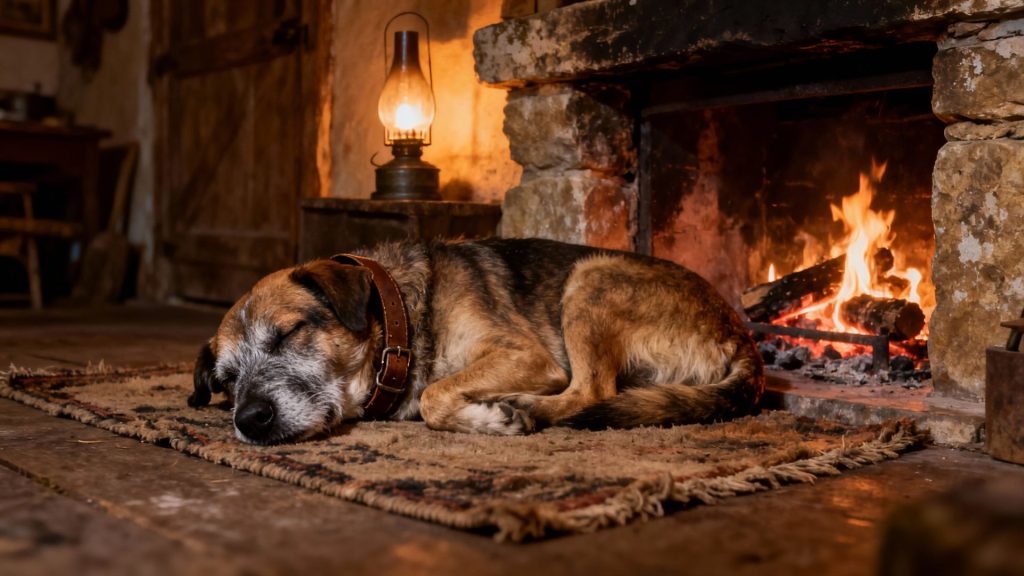
Guardians of the Hearth Flame: The Dog’s Millennia-Long Odyssey to Human Companionship
Delving into the co-evolutionary bond that transformed wolves into devoted sentinels, exploring adaptive behaviors for domestic harmony and modern challenges in canine wellness.
Envision a moonlit night 15,000 years ago, where the flickering embers of a human campfire cast long shadows across the Eurasian steppe. From the periphery, a gray wolf emerges—lean, wary, yet irresistibly drawn by the scent of cooked meat. This ancestral figure, Canis lupus, stands as the silent progenitor of all domestic dogs, its presence a testament to the nascent alliance between two species. In that primal moment, the wolf’s keen senses—ears pricked for distant threats, nose twitching for opportunity—whispered of a future where wilderness and hearth would intertwine, setting the stage for an epic journey of mutual trust that reshaped the destiny of both.
The blade of evolution honed this bond through relentless natural selection. Genetic studies reveal how selective pressures favored wolves with reduced fear and heightened sociability, leading to morphological shifts: smaller skulls, floppy ears, and varied coat colors. These were not mere accidents but adaptations forged in the crucible of co-existence. For instance, the amylase gene duplication allowed dogs to digest starchy human foods, a direct response to shared meals around ancient fires. This biological alchemy transformed apex predators into companions, embedding loyalty into their DNA as deeply as the hunt once defined their wild kin.
Daily survival for the domestic dog unfolds as a nuanced ballet of instinct and learned behavior. Morning light finds them patrolling their territory—a remnant of pack vigilance—sniffing boundaries with precision. Play, often misinterpreted as frivolity, serves as critical training: a game of fetch mimics cooperative hunting, while tug-of-war strengthens jaw muscles evolved for tearing prey. In urban settings, dogs navigate complex social landscapes, interpreting human cues with astonishing acuity. Their ability to read subtle gestures—a pointed finger or averted gaze—stems from millennia of observing us, turning survival into an art of silent communication and unwavering guardianship.
Kinship weaves through the canine world in intricate patterns of reproduction and nurture. Females enter estrus biannually, signaling readiness through pheromones that draw suitors in a dance as old as the species. Post-birth, maternal devotion manifests in relentless grooming and warmth-sharing, while pack members often assist in pup-rearing—echoes of communal wolf societies. Modern breeds, however, face genetic bottlenecks; selective breeding for traits like brachycephaly compromises natural birthing, demanding human intervention. This tension between ancestral robustness and human-driven aesthetics underscores the fragility beneath their resilient exterior.
As ecosystem engineers in anthropogenic realms, dogs sculpt human habitats in profound ways. They regulate waste by scavenging—a behavior rooted in their role as camp cleaners—and their presence deters pests, reducing disease vectors. Beyond utility, they serve as emotional keystones: therapy dogs lower cortisol levels in stressed individuals, while their acute olfactory abilities detect medical emergencies like seizures. This symbiotic role extends to biodiversity; in rural areas, herding breeds maintain livestock balance, preventing overgrazing. Yet, their introduction can disrupt local fauna, highlighting the delicate equilibrium they inhabit.
Contemporary threats cast long shadows over this enduring legacy. Rising obesity rates—fueled by sedentary lifestyles and calorie-dense diets—mirror human epidemics, shortening lifespans. Genetic disorders proliferate: hip dysplasia in large breeds, respiratory issues in flat-faced varieties. Urbanization isolates dogs, triggering anxiety disorders absent in wild counterparts. Conservation efforts, however, offer hope: genetic diversity projects aim to restore vigor, while welfare laws promote ethical breeding. The challenge lies not in despair but in rekindling the ancestral wisdom that once ensured their thriving.
In the silent gaze of a dog, we glimpse eternity—a reflection of our own quest for connection and purpose. Their journey from wild packs to hearthside guardians embodies nature’s resilience, teaching that adaptation is not surrender but evolution’s poetry. As climate shifts and societies transform, dogs remind us that true companionship demands reciprocity: caring for them as they have cared for us across ages. In this unspoken pact, we find not just a pet, but a mirror to humanity’s capacity for empathy, urging us toward a future where all life flourishes in shared reverence.