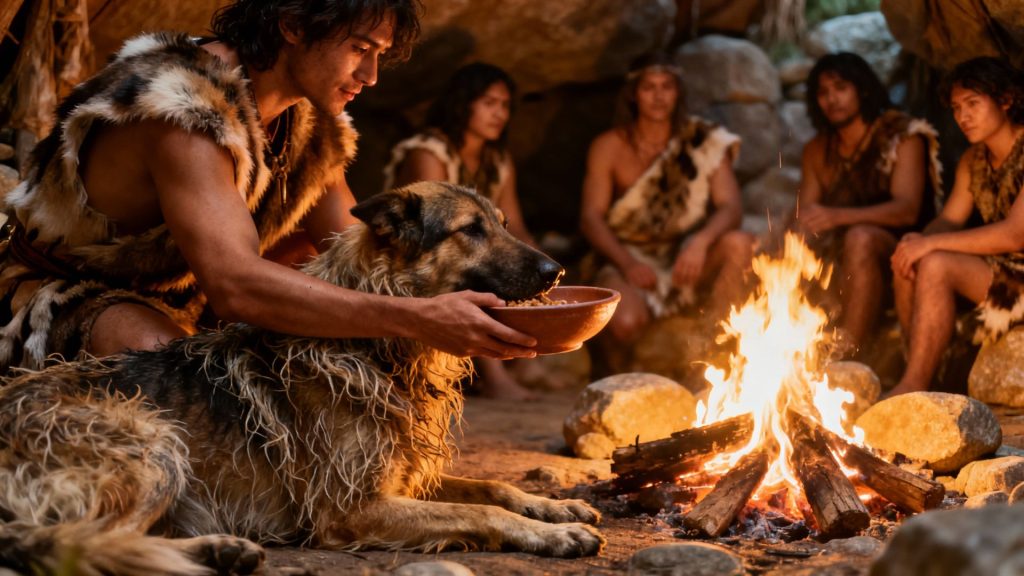
Whispers of the Hearth: The Domestic Dog, An Ancient Bond Forged in Fire and Fidelity
From wolf to guardian, tracing the evolutionary odyssey, behavioral adaptations, and the profound symbiosis that defines canine existence within human civilization.
Imagine a twilight meadow, where the last rays of sun gild the grass, and there, poised like a sentinel of ages past, stands a dog. Its ears twitch to the rustle of unseen creatures, eyes reflecting the fading light—a silent protector bridging the wild and the domestic. This first encounter captures not just an animal, but a legacy of loyalty, a testament to millennia where instinct and nurture intertwine. In this moment, the dog embodies the raw essence of companionship, a living bridge to our shared history, evoking a primal sense of awe as it surveys its realm with unwavering vigilance.
Evolution honed this creature through a crucible of change. Descended from gray wolves, Canis lupus familiaris emerged not by chance, but through natural selection favoring traits like heightened social intelligence and reduced aggression. Genetic studies reveal mutations in genes such as WBSCR17, enhancing docility and allowing early dogs to thrive near human camps. This adaptation sculpted a master communicator, capable of reading human gestures with uncanny precision—a survival edge forged in the fires of coevolution. The dog’s physiology, too, transformed: a shorter muzzle for varied diet, and a brain wired for empathy, turning predator into partner in a dance of mutual benefit.
Daily life for the dog is a symphony of instinct and learned behavior. In the wild echoes of play, it practices hunting through fetch and chase, its olfactory prowess—300 million scent receptors—unraveling stories in every breeze. Survival strategies extend to territorial marking and pack dynamics, where barks and body language weave complex social tapestries. Yet in the home, these rituals adapt: a morning walk becomes a foraging expedition, obedience training a mimicry of pack hierarchy. This behavioral plasticity ensures resilience, turning potential threats into opportunities for connection, as the dog navigates urban jungles with the same finesse its ancestors used in forests.
The cycle of life unfolds in the tender bonds of reproduction and kinship. Females enter estrus biannually, signaling readiness through pheromones, while males compete in displays of strength. After mating, gestation lasts 63 days, culminating in litters where maternal instincts shine—nursing, grooming, and teaching pups survival skills. This nurturing extends beyond bloodlines; dogs form lifelong attachments with human families, their pack mentality fostering protectiveness and emotional support. Such bonds, documented in ethological studies, reveal a depth of care that transcends species, embodying the universal drive to nurture and belong.
As a keystone in human ecosystems, the dog’s role is profound. It serves as a companion species, reducing stress through oxytocin release in interactions, and acting as an emotional barometer for mental health. Ecologically, while domesticated, it retains influences: as a scavenger, it aids waste management, and in rural settings, it guards livestock, echoing ancestral duties. This dual identity—both dependent and contributor—highlights its irreplaceable niche, where each wagging tail reinforces the fabric of community and biodiversity in anthropized landscapes.
Today, shadows loom over this legacy. Genetic bottlenecks from selective breeding predispose breeds to ailments like hip dysplasia and heart disease, while overpopulation and abandonment threaten welfare. Conservation efforts, led by organizations such as the World Small Animal Veterinary Association, promote responsible ownership and spay-neuter programs. Yet, hope persists in scientific advances: genomic research offers paths to healthier lineages, proving that human stewardship can mend what it once shaped, turning threats into catalysts for renewal.
In the dog’s gaze, we find a mirror to our own journey—a reminder of resilience, adaptation, and the silent pacts that bind species. Its story, from wild hunter to hearth guardian, teaches humility: that true strength lies in interdependence, and in nurturing bonds, we honor the delicate balance of life. This eternal dialogue with nature urges us to cherish not just the animal, but the shared evolution that whispers of unity in diversity.