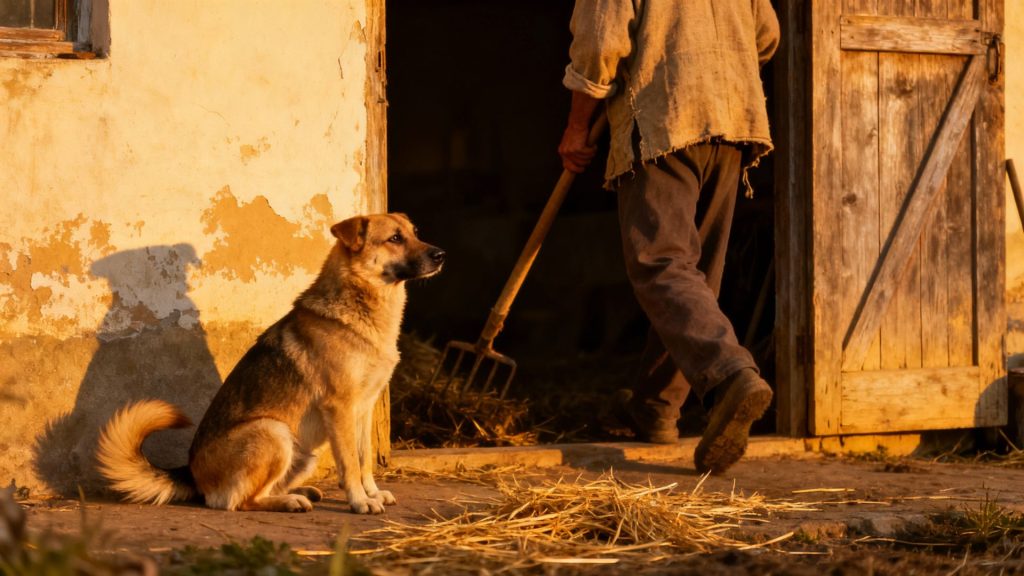
Guardians of the Dawn: How the Domestic Dog Wove Itself into the Tapestry of Human Existence
Emerging from the shadows of wolves, the domestic dog”s co-evolution with humanity has forged unparalleled adaptations, yet it confronts modern perils that test this ancient bond and its ecological resilience.
Imagine a primordial dusk: under a canopy of ancient oaks, a wolf pack moves with silent grace, their amber eyes reflecting the last embers of daylight. At the edge of a flickering human campfire, curiosity draws one bold individual closer—a tentative dance of trust between species that would echo through millennia. This primal encounter, where fear yielded to mutual benefit, marked the genesis of Canis familiaris, transforming the wild hunter into humanity”s eternal shadow, forever bound to the rhythms of our shared journey.
The crucible of evolution honed the dog through relentless natural selection and human symbiosis. Genetic evidence dates domestication to 15,000–40,000 years ago, favoring traits like heightened sociability and tameness. Key adaptations emerged: dogs decode human gestures with unmatched precision, a neural feat born from co-evolution, while their digestive systems evolved to thrive on starch-rich diets, mirroring our shift from foraging to agriculture. This biological alchemy turned predators into omnivorous companions, their bodies blueprints of resilience sculpted by time”s patient hand.
In the theater of daily survival, dogs enact strategies refined by domestication. As guardians, their acute senses detect intruders or illnesses; as hunters in play, they channel ancestral drives into joyful retrieves. Proper care—balanced nutrition, exercise, and mental enrichment—sustains their vitality. This intricate dance showcases how ancient instincts, like pack loyalty, manifest in protective behaviors over homes and hearts, turning routine pet keeping into a testament of co-adapted survival, where a simple walk becomes a ritual of trust.
The rhythm of life beats within canine kinship, revealing deep familial bonds. Breeding follows seasonal cues, with litters born after 63 days of gestation, as mothers nurture pups with unwavering devotion, teaching social cues through gentle nuzzles and play. In multi-dog homes, hierarchies echo wild structures, fostering communal harmony. This extends to humans: dogs” oxytocin surges during interactions, mirroring infant-parent bonds, a biological testament to millennia of intertwined existence, where affection becomes the thread weaving species together.
As ecological sentinels in human-dominated worlds, dogs occupy a complex niche. In rural realms, they control pests and aid herding, acting as keystone species that stabilize ecosystems; yet urban strays disrupt wildlife, exposing vulnerabilities. Their presence subtly engineers human environments—reducing stress, fostering empathy—but negligence breeds overpopulation, threatening biodiversity and health. This duality underscores their role as both beneficiaries and victims of human expansion, a delicate balance demanding responsible stewardship for shared thriving.
Amid contemporary shadows—abandonment, diseases like rabies, and habitat fragmentation—the dog”s legacy radiates hope. Conservation through spaying, neutering, and shelters offers a dawn of renewal. Their story, etched in evolutionary endurance, invites reflection: in their unwavering gaze, we glimpse our own humanity, a call to nurture the wild within us. For in this ancient covenant, we find not just companionship, but a profound dialogue on adaptation and guardianship, urging us toward a future where all life flourishes.