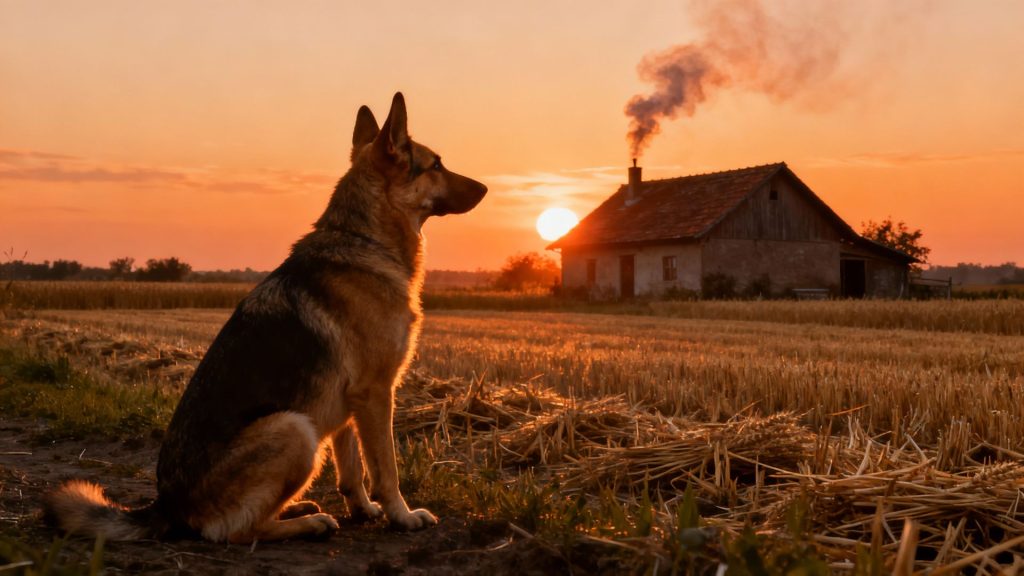
Echoes of the Wild: The Domestic Dog, Guardian of Hearts Across Civilizations
Descended from ancient wolves, dogs have journeyed alongside humanity for millennia, evolving into versatile companions that shape emotions, societies, and daily rhythms while confronting contemporary perils.
Imagine standing at dawn’s edge in a primordial grassland, where the first light reveals a silhouette—neither fully wolf nor yet dog—a creature whose amber eyes hold the untamed essence of wilderness, yet whisper the nascent bond of companionship. This ancestor of Canis lupus familiaris emerged from the Eurasian steppes over 15,000 years ago, its presence a bridge between humanity’s nomadic past and the dawn of domestication, evoking awe through silent resilience and instinctual grace.
The blade of evolution honed the dog’s senses to extraordinary precision: an olfactory system detecting scents at one part per trillion, far surpassing human capabilities, and a social intelligence that deciphers subtle human gestures with uncanny accuracy. These adaptations, forged through millennia of natural and artificial selection, transformed solitary hunters into empathetic protectors, enabling dogs to thrive in diverse environments from Arctic tundras to urban sprawls, their genetic plasticity a testament to survival’s relentless sculpting.
In the poetry of survival, dogs channel ancestral lupine behaviors—stalk, chase, and pack coordination—into modern contexts: herding livestock with innate precision, alerting to intruders as vigilant sentinels, or retrieving objects in playful mimicry of hunts. Such instincts, repurposed through co-evolution, reveal behavioral adaptability, where dogs balance predatory drives with cooperative roles, their daily rhythms a symphony of instinct and learned loyalty.
Bonds of blood and kinship unfold in intricate reproductive rituals; females nurture litters with fierce devotion, while altered pack dynamics foster cooperative rearing in multi-dog households. This social tapestry, rooted in ancestral hierarchies, strengthens pups’ survival through communal care, ensuring lineages endure despite human-imposed constraints like selective breeding, which introduces vulnerabilities yet highlights nature’s enduring ingenuity.
As ecological keystones in human-dominated ecosystems, dogs regulate rodent populations, serve as therapy anchors in mental health, and act as bio-sentinels for environmental toxins. Their role as inadvertent ecosystem engineers stabilizes communities, reducing pest outbreaks and fostering emotional resilience, though their dependence on humans reshapes natural balances, underscoring a symbiotic interdependence rarely paralleled in the animal kingdom.
Yet twilight encroaches: overbreeding fuels genetic disorders like hip dysplasia, abandonment swells shelters globally, and zoonotic diseases such as rabies pose dual threats. Conservation dawns through responsible ownership, spay/neuter initiatives, and vaccination campaigns, offering hope as organizations strive for sustainable coexistence, turning peril into promise for future generations.
In this eternal dialogue, dogs embody resilience and symbiosis, teaching us cross-species trust and the fragility of interdependence. Their presence reconnects humanity to the wild within, reminding us that in nurturing these domesticated souls, we cultivate empathy and honor the ancient pact that binds us all—guardians of life’s shared journey.