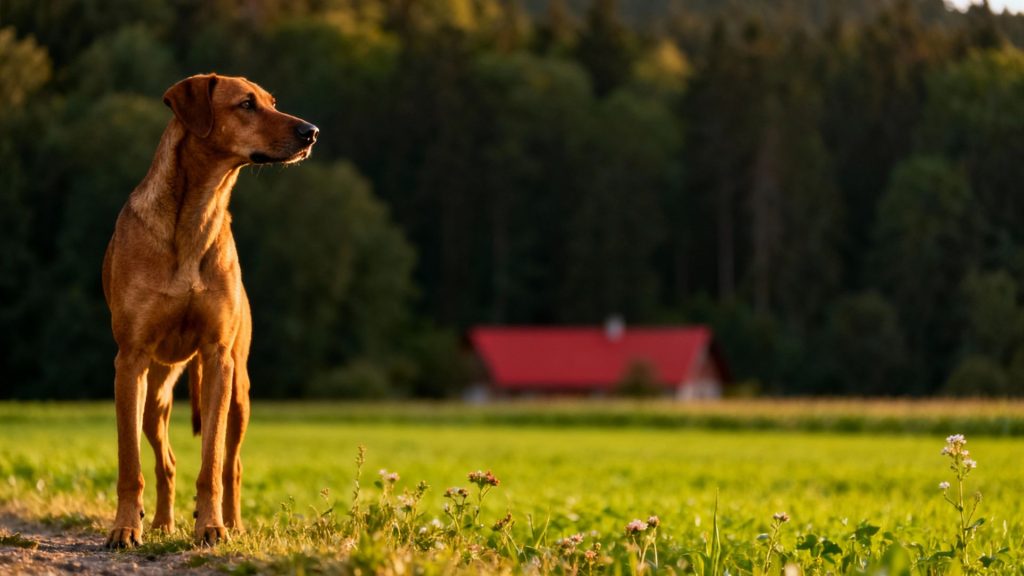
Whispers of the Ancient Pact: The Domestic Dog, Bridging Wilderness and Hearth
From Lupine Ancestors to Loyal Companions: How Millennia of Symbiosis Forged an Unbreakable Bond Between Species, Shaping Survival in Human Worlds.
Beneath the silver glow of a crescent moon, a shadow moves through the ancient forest—a gray wolf, its amber eyes reflecting millennia of wild instinct. This primal vision evokes the untamed spirit that still courses through the veins of every domestic dog, a creature now curled at our hearths, yet forever bound to the wilderness from which it emerged. The transition from predator to protector began over 15,000 years ago, when early humans and wolves forged an alliance, their shared hunt echoing in the modern dog’s alert posture and unwavering loyalty. In this intimate coexistence, we witness not just a pet, but a living bridge between untamed nature and domestic sanctuary, where each breath carries the weight of evolutionary history.
Evolution honed the dog into a master of adaptation, sculpting traits like heightened social intelligence and morphological diversity through relentless natural and artificial selection. Selective breeding, driven by human needs, amplified innate abilities such as scent detection—capable of discerning parts per trillion—and vocal communication, enabling dogs to interpret subtle human cues with uncanny precision. This genetic tapestry, woven from wolf ancestry, manifests in breeds ranging from the swift Greyhound to the sturdy Mastiff, each a testament to nature’s capacity for transformation under symbiotic pressure. The dog’s genome, mapped in studies like those from the Broad Institute, reveals mutations in genes like IGF1, governing size and temperament, illustrating how environmental partnership reshapes biology in profound, measurable ways.
Daily existence for a dog unfolds as a delicate dance of instinct and learned behavior, where survival strategies inherited from wolves are repurposed for domestic harmony. Scavenging instincts drive them to explore kitchens with methodical curiosity, while play—chasing balls or wrestling—mimics ancestral hunting rituals, strengthening muscles and social bonds. Grooming rituals, such as meticulous licking, maintain hygiene and reduce stress, echoing pack dynamics in the wild. These behaviors, observed in ethological research, demonstrate how dogs navigate human environments with innate efficiency, their routines a silent poem of adaptation that transforms mundane moments into acts of primal grace.
Reproduction and kinship in dogs weave a complex narrative of life’s continuity, marked by intricate courtship displays and devoted parental care. Females enter estrus cycles governed by hormonal shifts, attracting mates through pheromone signals and vocalizations. Post-birth, mothers nurture pups with relentless dedication, licking them to stimulate breathing and providing milk rich in antibodies, while fathers often guard the den. This familial structure, documented in studies of feral dog populations, highlights the species’ capacity for emotional depth, where the bond between parent and offspring serves as a microcosm of resilience, ensuring the lineage endures against modern challenges like genetic bottlenecks.
As ecological keystones in human-dominated landscapes, dogs fulfill roles far beyond companionship, acting as sentinels of health and harmony. Their presence reduces human stress hormones, as evidenced by cortisol level studies, and aids in pest control through natural hunting urges. Service dogs, trained for tasks from guiding the blind to detecting seizures, exemplify this interspecies synergy, turning instinct into lifesaving action. In urban ecosystems, dogs contribute to biodiversity by dispersing seeds through movement, their paw prints tracing invisible threads that connect fragmented habitats, reminding us that even in domestication, they anchor the delicate balance of life.
Yet, this bond faces twilight threats, from hereditary ailments like hip dysplasia—exacerbated by intensive breeding—to abandonment crises swelling shelters worldwide. Overpopulation fuels euthanasia rates, while climate-induced habitat loss strains feral populations. Conservation emerges through responsible ownership: spaying and neutering programs, championed by organizations like the ASPCA, curb numbers, and adoption initiatives offer second chances. Scientific advances, such as genetic testing for disease prevention, illuminate paths forward, transforming despair into hope as we safeguard this shared legacy with informed compassion.
In the silent gaze of a dog, we find an eternal dialogue with nature—a reflection of loyalty, adaptability, and the fragile beauty of coexistence. This relationship, forged in firelight millennia ago, teaches that survival thrives not in isolation, but in mutual dependence, urging humanity to honor the pact that binds us to all living beings. As stewards, we hold the dawn of a new chapter, where every act of care resonates with the wisdom of the wild, echoing across generations in a testament to life’s enduring resilience.