Whispers Across the Firelight: The Domestic Dog’s Millennia-Spanning Journey from Wild Ancestor to Heart Companion
Born of icy winds and hunting packs, dogs evolved through human hands into devoted sentinels, embodying a unique symbiosis that now faces modern trials of genetic fragility and behavioral displacement.
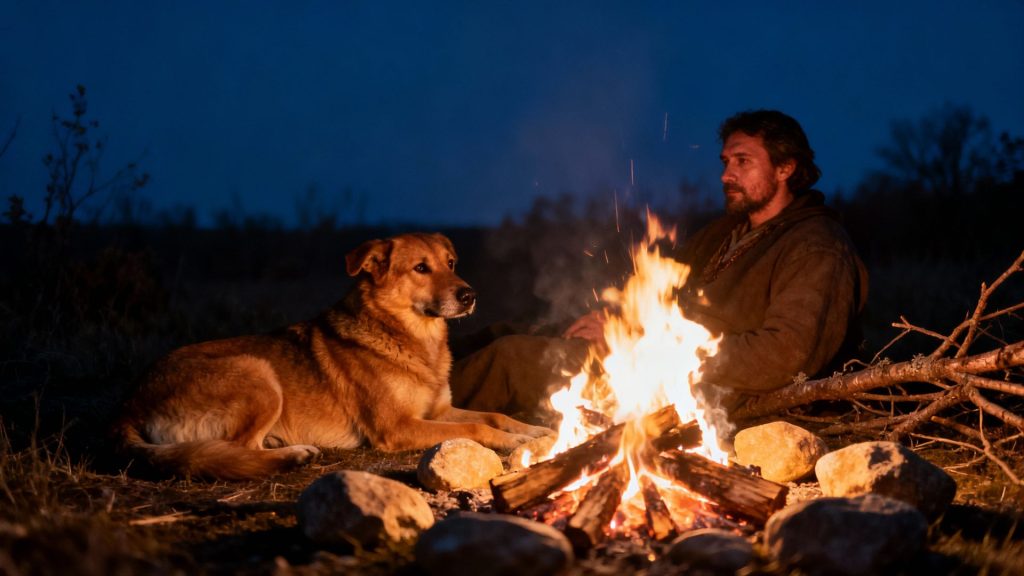
Imagine the crisp, star-studded night of a Pleistocene wilderness, where the haunting howl of a gray wolf echoes across frosted tundras—a primordial call to pack and prey. Yet, within the flickering warmth of early human hearths, a profound transformation began: wild Canis lupus cautiously approached, drawn by scraps and safety, forging the first threads of a bond that would birth Canis familiaris. This tentative dance between predator and provider ignited a journey, bridging millennia to sculpt the loyal guardian that now rests at our feet, its eyes reflecting ancient instincts tempered by domestication. Such is the origin story of the dog, a creature whose very presence whispers of untamed origins and forged alliances, inviting us into a narrative written in genes and trust.
Evolution sculpted dogs through the relentless chisel of artificial selection, where humans became the architects of change. Over 15,000 to 40,000 years, genetic adaptations emerged—such as enhanced amylase genes for digesting starch-rich human diets—diverging from wolf ancestors who thrived on raw meat. Behavioral shifts favored tameness and sociability; traits like reduced aggression and heightened empathy were amplified, enabling dogs to interpret human gestures and emotions with uncanny precision. This selective pressure, a mirror to natural forces, transformed fearsome hunters into cooperative partners, their genomes etched with the marks of domestication. Like rivers carving canyons, this process reshaped physiology, from skull morphology to coat variations, crafting a masterwork of interspecies innovation.
Survival for dogs unfolds in the rhythm of everyday rituals, a blend of innate instincts and learned domesticity. Descended from wolves skilled in coordinated hunts, modern dogs channel predatory drives through play—chasing balls mimics the pursuit of quarry, while scavenging adapts to urban landscapes, turning alleyways into foraging grounds. Social structures persist; in homes, they form hierarchies akin to packs, seeking leadership through loyalty and submission. Daily routines—exploring parks, responding to cues—reveal a seamless integration of ancient behaviors into human contexts, a testament to behavioral plasticity. This life, devoid of wilderness perils yet rich in interaction, weaves a tapestry of adaptation, where each wag and bark echoes ancestral survival songs.
The bonds of lineage and nurture define canine reproduction, a saga of continuity and care. Breeding, influenced by selective human practices, has yielded diverse breeds—from herders to guardians—each with tailored traits. Yet, maternal instincts remain unaltered; mothers guard pups fiercely, cleaning and nursing with instinctual precision, while fathers in social groups often share protective duties. This circle of kinship extends to pack dynamics, where cooperation in raising young fosters resilience, illustrating nature’s blueprint for enduring legacy. Such intimate ties, forged in den and home, underscore dogs’ role as familial anchors, their reproductive strategies a dance of genetics and devotion.
As ecological keystones in human-dominated worlds, dogs transcend companionship to shape ecosystems. Historically, they aided in hunting and herding, regulating prey populations and supporting agricultural systems. Today, their presence as therapy animals alleviates human stress, promoting mental well-being, while service roles in detection and rescue highlight their versatility. However, this integration carries impacts: pet waste introduces nutrients into environments, and free-roaming populations can disrupt local wildlife. Thus, dogs act as indicators of human-animal coexistence, their lives a microcosm of broader ecological interdependencies, where domestication blurs into environmental stewardship.
Contemporary challenges cast shadows on this ancient alliance. Genetic disorders plague many breeds—hip dysplasia in large dogs, respiratory issues in brachycephalic types—stemming from intensive inbreeding. Abandonment fuels stray crises in cities, leading to overpopulation and welfare concerns, while the loss of natural behaviors in highly domesticated lines sparks identity dilemmas. Conservation emerges through shelters and ethical breeding programs, where spaying, neutering, and adoption initiatives offer beacons of hope. This era, marked by both peril and promise, demands vigilance to preserve the integrity of a species reshaped by human hands.
In the silent gaze of a dog, we confront the eternal dialogue between wildness and domestication—a reflection of mutual evolution and shared vulnerability. Their journey teaches resilience, loyalty, and the art of coexistence, reminding us that in the bond with another species, we glimpse our own place in nature’s tapestry. Dogs embody the paradox of strength and fragility, a living testament to how life adapts, endures, and inspires reverence for the interconnected web of existence.