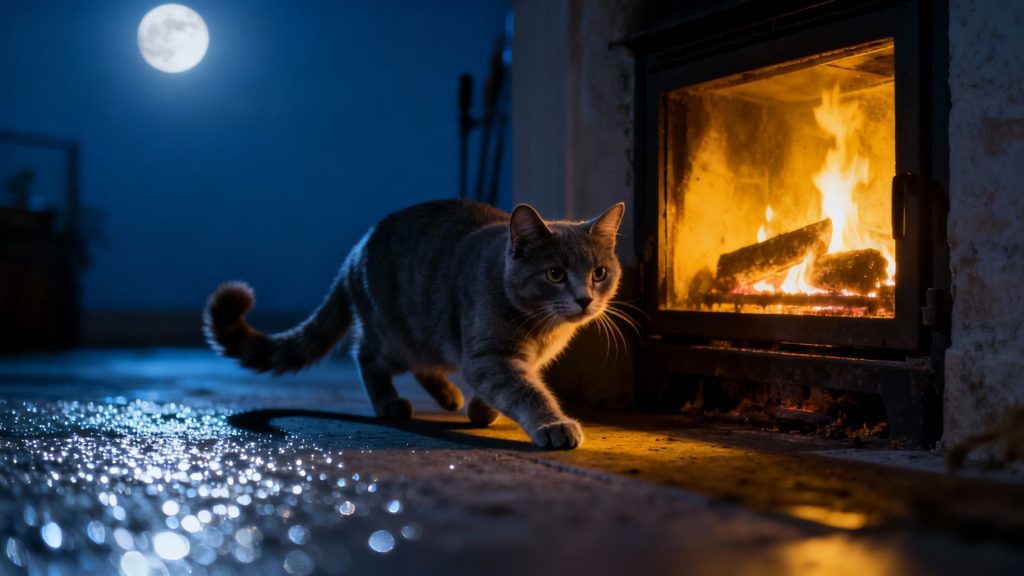
Shadowed Steps and Moonlit Whispers: The Domestic Cat, an Ancient Hunter Beneath the Hearth’s Light
Descended from solitary desert stalkers, this enigmatic creature embodies evolutionary mastery—nurturing bonds while retaining wild instincts, reshaping micro-ecosystems, yet facing perils in human-altered landscapes.
In the velvet silence of midnight, a shadow slips through dew-slick alleys—a feline silhouette, eyes aglow like twin lanterns, muscles fluid in the moonlight. It pauses, ears pricked to the whisper of rustling leaves, embodying an ancient vigilance that bridges urban sprawl and untamed origins. This moment evokes the primal grace of a predator poised between worlds, where concrete and nature intertwine, inviting us into a realm where every paw print carries echoes of millennia.
Forged by relentless natural selection across 10,000 years, the domestic cat’s adaptations stand as marvels: retractile claws, honed from ancestral need for stealth on arid plains, allow silent stalking; night-vision capabilities, enhanced by tapetum lucidum, transform dim cityscapes into hunting grounds. These traits, sculpted through survival in fluctuating environments, reveal evolution’s hand—a testament to how Felis catus descended from the African wildcat to thrive beside humans, its body a living artifact of ecological ingenuity.
Daily survival unfolds as a rhythmic dance: at dawn, instinct drives crouched stalks through gardens, where pouncing mimics ancestral hunts; play-fighting refines predatory skills, while meticulous grooming preserves health in confined spaces. This existence balances solitude—a legacy of solitary hunters—with moments of communal warmth, as cats navigate rooftops and hedgerows, their routines a silent ode to endurance in fragmented habitats.
Reproduction weaves delicate threads of continuity: queens birth litters in hidden nooks, nurturing kittens with fierce devotion—cleaning, teaching hunting techniques through play. Social structures emerge in colonies, where kinship bonds form through mutual grooming and shared territories, reflecting complex communication via scent and vocalizations. This intimate cycle highlights life’s fragility and resilience, where each generation embodies inherited wisdom for thriving in proximity to humanity.
As ecological architects, cats subtly engineer their surroundings: hunting rodents curtails pest populations, yet their predation on songbirds sparks debates on invasive impact. This dual role underscores their position as indicator species, revealing imbalances in urban biodiversity. Through companionship, they offer emotional solace, yet their presence in human-dominated spaces challenges us to foster coexistence with mindful respect for nature’s intricate web.
Contemporary threats loom: diseases like feline leukemia virus, road accidents, and abandonment erode populations, while feral colonies face resource scarcity. Conservation pivots on trap-neuter-return programs, reducing suffering without extinguishing wild spirit. This era demands vigilance, as documented by organizations like Alley Cat Allies, emphasizing science-based stewardship to secure a future where cats remain symbols of adaptability.
In this eternal dialogue, cats mirror our own duality—wildness tempered by tenderness, independence woven with trust. They teach lessons in patience, observation, and resilience, reminding us that even in domestication, nature’s essence endures. As guardians of thresholds, they embody the unbroken chain of life, urging humanity toward deeper harmony with the earth’s silent keepers.