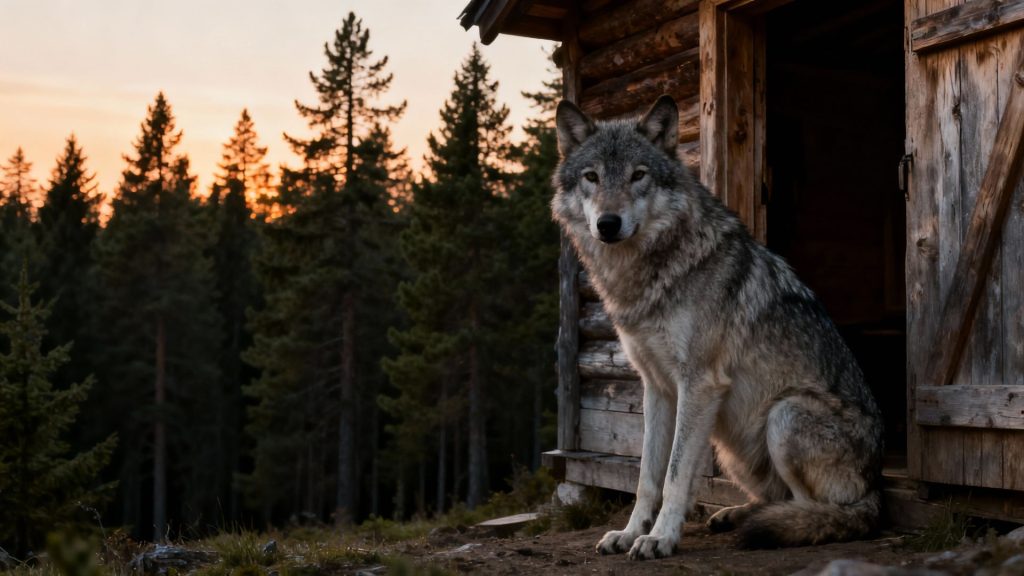
The Silent Pact: When Wolves Became Keepers of Our Hearths in the Timeless Embrace
From wild hunter to devoted companion, dogs reflect a 15,000-year journey of co-evolution, embodying resilience in the face of extinction and illuminating the profound symbiosis between species.
Imagine standing in the mist-cloaked forests of the late Pleistocene, where shadows shift and amber eyes pierce the gloom—the ancestors of dogs, wolves, move with fluid grace across the frozen tundra. A pack converges on a woolly mammoth carcass, their coordinated silence a testament to primal intelligence. This scene, etched in ice and bone, evokes the raw majesty of a creature poised on the brink of transformation. The air crackles with tension; it is the dawn of an epoch where wilderness would yield to hearth, and predator to protector.
Evolution sculpted dogs through relentless natural selection, forging adaptations that turned solitary hunters into social partners. Genetic studies reveal a pivotal shift: mutations in genes like WBSCR17 enhanced social cognition, allowing proto-dogs to interpret human gestures—a trait absent in wolves. This neural rewiring, honed over millennia, transformed them into masters of empathy. Their ability to read subtle cues, such as a raised eyebrow or averted gaze, mirrors an ancient dialogue where survival hinged on mutual trust. Thus, the wolf’s fierce independence was tempered into the dog’s unwavering loyalty, a biological alchemy born of shared firesides.
In the rhythm of daily survival, dogs exhibit a ballet of instinct and learned behavior. Once apex predators, they retain hunting prowess—stalking prey with coiled energy, ears pricked for the faintest rustle. Yet domestication refined this into cooperative strategies: herding sheep with precision or retrieving game without consuming it. Their diet, now omnivorous through adaptation, includes scavenged scraps and kibble, yet the ghost of carnivory lingers in their powerful jaws and digestive enzymes. This duality—wildness tamed by nurture—unfolds in every bound across a meadow, a living poem of endurance.
Reproduction weaves the tapestry of canine continuity, marked by complex social bonds. Females enter estrus biannually, signaling readiness through pheromones that draw suitors in a dance of selection. After mating, mothers nurture pups with fierce devotion, regurgitating food and teaching survival skills through play. In packs or human families, hierarchies form, with alpha figures guiding through gentle dominance—not aggression. This nurturing extends beyond kin, as seen in communal care among strays, where unrelated adults protect young, revealing a deep-seated drive for collective survival.
As ecological linchpins, dogs anchor human ecosystems as keystone companions. They serve as sentinels, detecting dangers from seizures to intruders, and as healers, reducing stress through oxytocin release in owners. In rural settings, they control pests and aid hunting; in urban sprawls, they foster community bonds. This role, however, transcends utility—dogs are bioindicators of environmental health, their declining populations in polluted areas signaling broader ecological crises. Their presence stabilizes the human-nature interface, a bridge between wild origins and civilized realms.
Today, dogs face twilight challenges: habitat fragmentation from urbanization, genetic disorders like hip dysplasia bred from selective pressures, and abandonment crises where millions languish in shelters. Conservation efforts, led by organizations such as the World Health Organization, focus on spay-neuter programs and anti-cruelty laws, yet the threat persists. Climate change exacerbates vector-borne diseases, yet resilience shines through—strays adapting to cityscapes, their howls a defiant echo against oblivion. This is not an elegy but a call to stewardship, where human actions can herald a new dawn.
In the eternal conversation of life, dogs embody the paradox of strength and vulnerability—a mirror to our own journey. They teach that loyalty is not submission but a covenant forged in fire, and that adaptation is the art of survival. As shadows lengthen, their silent gaze reminds us of interconnectedness: in their wagging tails lies the heartbeat of wilderness, urging us to cherish the fragile web of existence. For in understanding dogs, we glimpse the soul of evolution itself—a testament to life’s indomitable will.