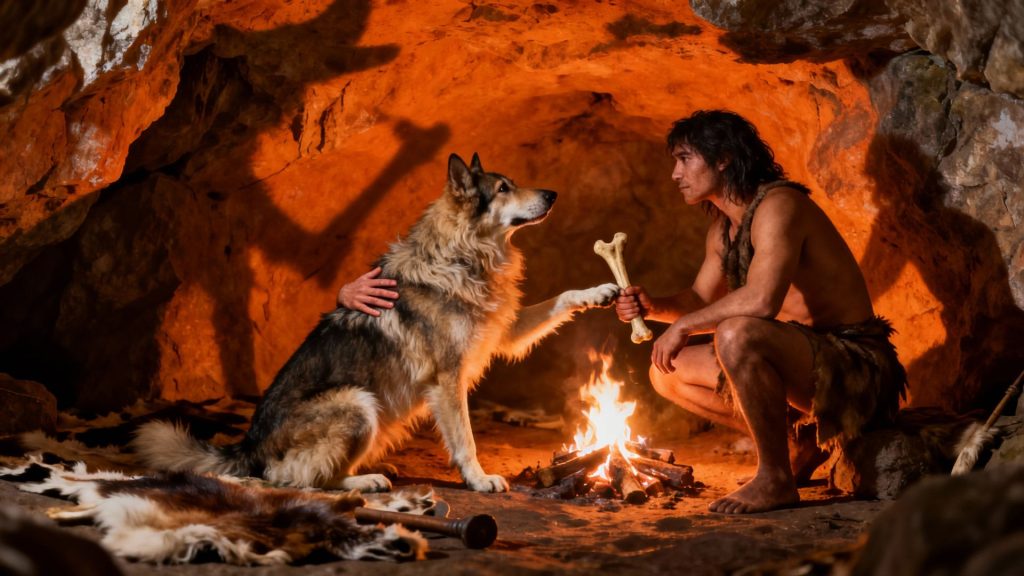
Whispers from Ancient Hearths: The Domestic Dog, a Symphony of Evolution Forged by Human Hands
From Wilderness Shadows to Our Doorsteps, How Millennia of Co-Evolution Crafted a Loyal Guardian, Yet Urban Neglect Echoes as a Silent Threat
Beneath the amber dawn, in a time-carved landscape where frost-kissed mountains meet windswept plains, a lone canine ancestor emerges—the wolf, its eyes reflecting the primal void. Step forward through millennia, and its echo now rests curled by a human hearth, a furry sentinel in our modern dwellings. This journey from untamed wilderness to loyal companion mirrors the deep interweaving of two species, an unexpected bond that began in mutual curiosity. In homes today, their presence fills spaces once occupied by nature’s vastness, offering silent companionship that awakens ancestral memories within us.
The blade of natural selection chiseled Canis lupus into a new form: the domestic dog. Over 15,000 years, genetic drift sharpened by selective pressures sculpted traits such as expressive eyes and heightened empathy. This evolutionary marvel, documented in archaeological finds from Siberia to the Middle East, reveals how reduced aggression genes enabled tolerance in human camps. Adaptations like enhanced starch digestion marked a dietary shift from raw meat to shared grains, forging a survival toolkit honed not by wilderness, but by the glow of early fires.
In the daily rhythm of human habitats, the dog’s existence weaves a survival poetry. Morning walks mirror the ancestral hunt—paws padding over sidewalks evoke grasslands, while feeding routines replace pack foraging. Grooming rituals, as instinctive as fur cleansing in riverbeds, prevent disease and strengthen bonds. Yet even in safety, the genetic imprint of vigilance persists; a bark in the night echoes ancient warnings, a testament to adaptations buried deep within.
Life’s continuity unfolds through the intimate dance of reproduction. Females birth litters in hidden corners of homes, nurturing offspring with devoted care that mirrors wild dens. Young pups learn social cues from both mother and human handlers, developing familial ties that span species. This reproductive strategy ensures genetic diversity while fostering profound attachments, transforming households into miniature packs where loyalty becomes the ultimate currency.
Dogs serve as ecological keystones in human-dominated ecosystems, shaping our environments through emotional symbiosis. As empathetic listeners, they alleviate human stress and trauma, much like ecological indicator species signaling system health. Their keen senses, once tools for tracking prey, now protect homes and guide the visually impaired, redefining their role from predator to silent ally in the urban mosaic.
Despite the dawn of domestication, shadows lengthen: abandonment rises in crowded cities, overpopulation strains shelters, and preventable diseases like parvovirus surge. Real-world conservation efforts, such as adoption drives led by organizations recorded in global news, fight these tides. Yet each challenge underscores the fragility of this alliance, reminding us that neglect can unravel millennia of co-evolution.
In this eternal conversation, dogs illuminate the resilience woven into life’s fabric. Their dual existence—wild at heart yet domesticated in form—teaches us about adaptation, trust, and the shared journey of survival. As we care for them, we find reflections of our own humanity, deepening our reverence for the interconnected web that binds all beings.