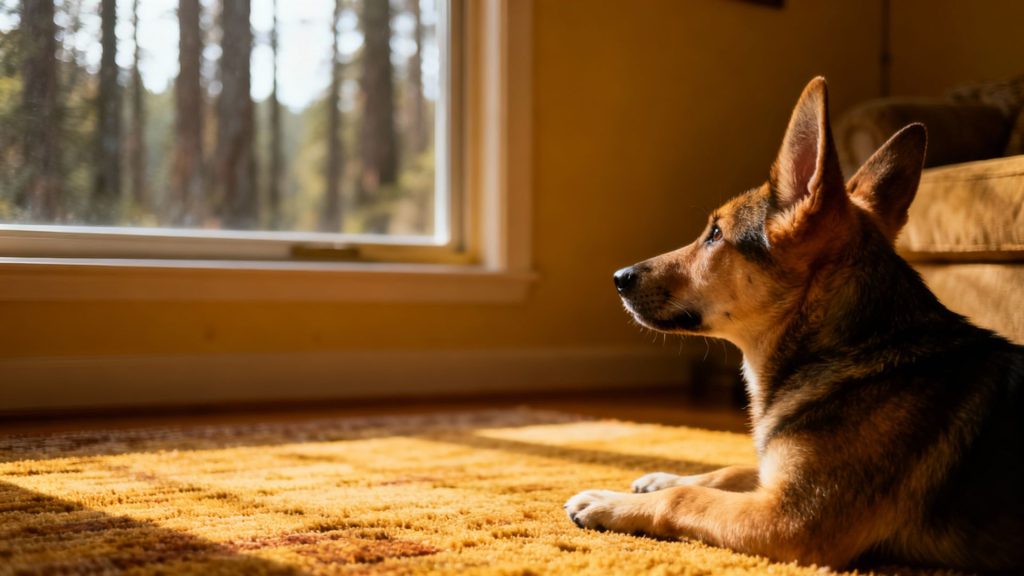
Whispers of the Wild at the Hearth: Ancient Codes in Domestic Companions
Unveiling the Wild Instincts Woven into Pets, and How Honoring Their Evolutionary Legacy Deepens Our Guardianship and Shared Bond
Imagine a cat poised motionless by the window, pupils dilated as it tracks a sparrow’s flight—a tableau where millennia of predatory instinct pierces the veneer of domesticity. In that suspended moment, the African wildcat’s legacy thrums beneath velvet paws, reminding us that our homes shelter not merely pets but evolutionary marvels carrying ancestral blueprints in their bones. This silent dialogue between hearth and wilderness forms the core of meaningful companionship, where understanding begins with recognizing the untamed echoes in every purr and playful pounce.
Domestication sculpted but never erased the survival algorithms forged in wilderness. The feline’s vertical pupils and exquisite night vision remain perfected tools for crepuscular hunting, while canine social hierarchies mirror ancestral pack dynamics. These are not relics but living systems: a dog’s ritualistic circling before sleep recreates grassland nest-building, and a cat’s compulsive scratching marks territory through paw-scent glands—biological imperatives persisting through twelve thousand years of cohabitation. Such adaptations reveal nature’s indelible signature, written in neural pathways that still map to savannas and forests.
Daily existence becomes a ritual of translated instincts. Observe the meticulous hunt-sequence: stalk, chase, pounce—rehearsed through feather toys as cats channel ancestral desert survival. Dogs enact scavenger protocols through scent-driven explorations, their noses processing chemical narratives invisible to humans. Even feeding patterns whisper of origins: feline multiple small meals mirror successful predation cycles, while canine food-guarding echoes resource competition. These behaviors demand environments honoring their biological poetry—vertical climbing spaces simulating trees, digging patches substituting earth, and puzzle feeders engaging cognitive hunting circuits.
Reproductive drives reveal evolution’s uncompromising imperative. The queen’s fierce protection of kittens mirrors wild felid strategies against predation, while intact male cats spray boundaries as their ancestors marked territories. Yet responsible stewardship requires tempering biology with ethics: spaying/neutering prevents overpopulation tragedies while preserving nurturing essence. Witness the cross-species miracle—a dog gently carrying human-raised kittens, or cats grooming canine companions—where ancient caregiving instincts transcend genetics, weaving interspecies families through shared vulnerability.
Within human ecosystems, pets function as emotional keystone species. Their presence lowers cortisol levels and blood pressure, fulfilling humanity’s primal need for non-judgmental connection—a bond forged when wolves first approached campfires. Yet this symbiosis carries ecological weight: free-roaming cats disrupt local avifauna, while irresponsible waste management pollutes watersheds. Recognizing pets as ecological actors demands conscientious containment, vaccination protocols, and environmental enrichment that channels instincts constructively, transforming potential disruption into harmonious coexistence.
Modernity presents new crucibles: processed diets triggering obesity epidemics, confinement breeding congenital disorders, and behavioral neuroses from instinctual frustration. Yet science illuminates solutions—species-appropriate nutrition mirroring ancestral diets, enrichment devices satisfying foraging urges, and positive reinforcement honoring learning capacities. The guardianship revolution lies in translating ethological insights into daily practice, creating habitats where ancient codes find dignified expression. In honoring their wild essence, we honor life’s interconnected tapestry, forging bonds that heal both human and animal souls across the species divide.