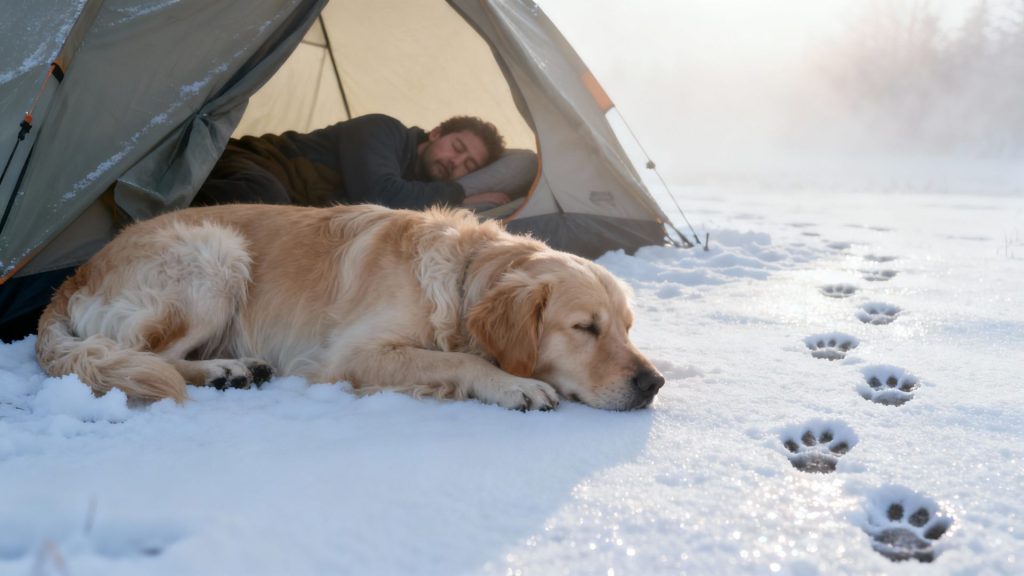
Whispers of the Wild Heart: The Dog, an Ancient Pact Written in Paw Prints and Loyalty
From wolf to guardian, this evolutionary voyager reshaped human destiny through scent, social genius, and silent devotion, standing as a living bridge between wilderness and hearth.
Beneath a canopy of stars on the ancient steppes, a gray wolf edges toward the flicker of a human campfire—a moment where fear yields to curiosity, igniting a bond that would echo through millennia. This primal encounter, etched in the silence of prehistory, birthed the domestic dog, Canis lupus familiaris, an ally whose presence transformed both species, weaving a tale of trust born from shared survival in an untamed world.
Natural selection honed the dog into an evolutionary masterpiece, forging adaptations like its unparalleled olfactory system, capable of detecting scents at one part per trillion—a tool not just for hunting but for deciphering human emotions. Enhanced social cognition, evolved from pack hierarchies, allowed it to interpret subtle gestures, bridging species with a silent language of loyalty and cooperation that defies the wild origins.
In the wild, ancestors relied on coordinated hunts to subdue prey; domesticated, dogs became masters of versatile survival, guarding homesteads, herding flocks, and scavenging alongside humans. Their roles adapted with agricultural shifts, yet retained core instincts—vigilance against threats, cooperation in tasks—etched into daily rhythms from countryside to urban sprawl.
Reproduction unveils life’s resilience: females nurture pups with fierce devotion, teaching social cues and survival skills through play and discipline. Pack dynamics, softened by domestication, foster complex bonds, mirroring human families in hierarchies of affection and mutual dependency, a testament to shared evolutionary paths.
As an ecological linchpin, dogs engineer human-dominated landscapes, controlling vermin, aiding in hunting, and serving as therapy companions that bolster mental health. Their presence shapes ecosystems, turning them into keystone species in anthropogenic realms, where they maintain balance while reflecting humanity’s imprint on nature.
Modern perils emerge: abandonment fuels feral populations spreading diseases like rabies, while overbreeding leads to genetic disorders. Conservation, guided by entities such as the World Health Organization, focuses on vaccination drives and adoption programs, weaving hope into the narrative of survival without despair.
In the dog’s unwavering gaze, we glimpse a profound dialogue—wildness tempered by empathy, strength found in partnership. It embodies nature’s lesson that true resilience lies not in isolation but in connection, a timeless echo of symbiosis that illuminates the fragile web binding all life.