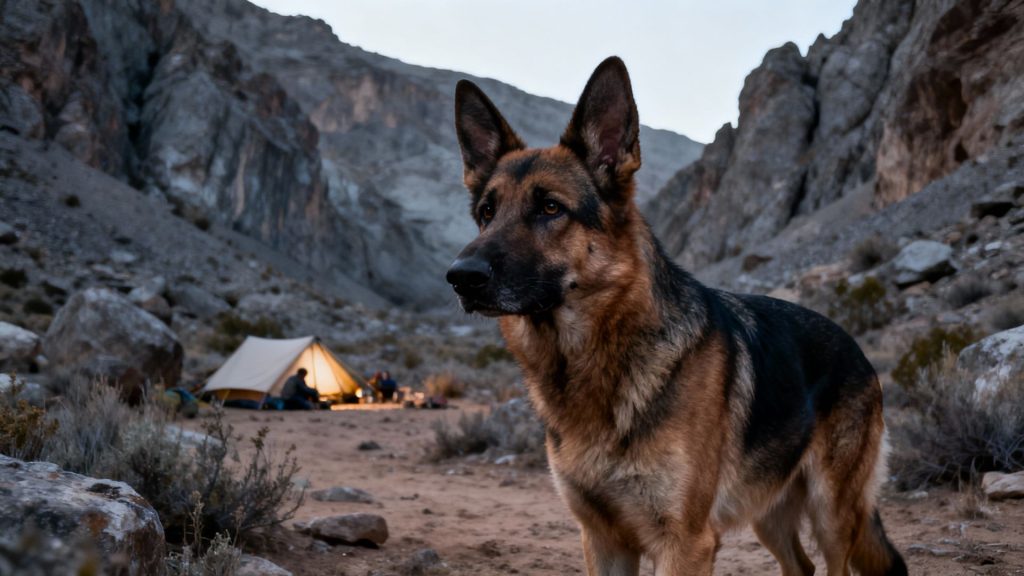
Echoes of the Wilderness: The Canine Odyssey from Ancient Prowess to Unwavering Devotion
Forged in the crucible of coevolution, dogs have transcended their lupine origins to become humanity’s most loyal sentinels, embodying adaptability and companionship across millennia.
In the hushed stillness of a Eurasian steppe at twilight, a gray wolf moves with silent precision—its form a silhouette against the fading light, embodying the raw essence of survival that would one day give rise to the domesticated dog. This ancestral encounter whispers of a time when predators roamed free, their instincts honed by ice ages and shifting landscapes, setting the stage for a bond that would redefine both species. Here, in the wild’s embrace, the dog’s journey begins, a testament to nature’s unyielding force and the serendipity of interspecies alliance.
Evolution sculpted the canine form with masterful strokes, favoring acute olfactory senses that detect scents at parts per trillion, and social intelligence that enables complex communication—traits forged through millennia of natural selection. These adaptations, rooted in the wolf’s cooperative hunting strategies, allowed early dogs to thrive alongside humans, transforming them from solitary hunters into indispensable partners. The genetic blueprint of loyalty and versatility emerged not as chance, but as a survival imperative in a world where mutual dependence meant enduring harsh climates and scarce resources.
Daily life for a dog unfolds as a symphony of instinct and learned behavior: from vigilant guarding that echoes ancestral watchfulness, to playful interactions that strengthen social bonds within human families. In urban parks or rural homesteads, their routines—marked by exploratory sniffs, energetic chases, and restful companionship—reveal an innate ability to navigate diverse environments. This adaptability, a legacy of their wild heritage, enables dogs to fulfill roles as varied as search-and-rescue heroes or comforting presences, all while maintaining an equilibrium between exertion and repose.
Reproduction in dogs weaves a tapestry of continuity, with females nurturing litters through attentive care, while pack dynamics or family units foster cooperative rearing. This intricate social structure, observed in breeds from huskies to retrievers, underscores a profound commitment to offspring survival, where shared responsibilities and protective instincts ensure the next generation’s resilience. Such bonds, free of human-like narratives, highlight the raw beauty of life’s perpetuation, driven by hormonal cues and environmental triggers that dictate mating seasons and pup development.
Ecologically, dogs serve as keystone species in human-dominated ecosystems, their presence influencing everything from pest control through hunting instincts to emotional support that enhances community well-being. As therapy animals in hospitals or guardians in farms, they bridge natural and artificial worlds, their roles shaped by selective breeding yet grounded in innate behaviors. This integration underscores their function as indicators of environmental health, where shifts in canine populations often mirror broader societal changes, reflecting humanity’s stewardship—or neglect—of the natural order.
Contemporary threats loom over dogs, including abandonment crises and diseases like parvovirus, exacerbated by urbanization and irresponsible breeding. Conservation efforts, documented through global adoption initiatives and vaccination campaigns, offer beacons of hope, demonstrating how science and compassion can mitigate risks. By addressing these challenges, humans honor the coevolutionary pact, ensuring dogs’ survival while acknowledging the fragility inherent in domestication’s delicate balance.
In the silent gaze of a dog, we find a mirror to our own humanity—a reflection of loyalty, resilience, and the enduring quest for connection. Their story transcends mere companionship, inviting us to ponder the intricate dance of evolution and the profound truths it reveals about interdependence. As stewards of this bond, we are reminded that in understanding dogs, we glimpse the essence of life’s tenacity and the shared destiny that binds all species in Earth’s grand narrative.