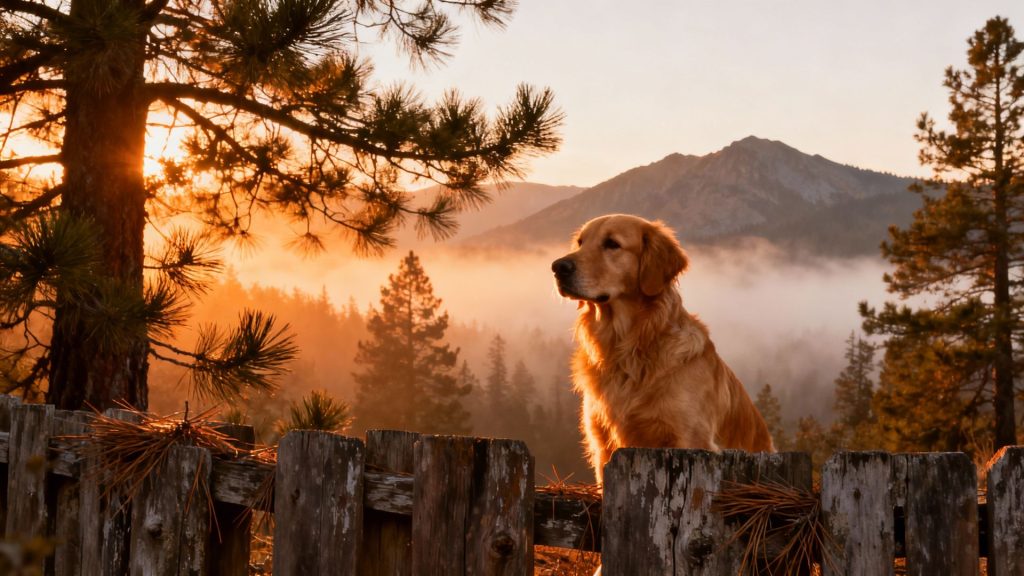
Silent Sentinels of Dawn: How Canine Souls Forged Bridges Between Wilderness and Hearth
Millennia of Shared Trajectories Unravel the Dog’s Journey from Steppe Hunter to Domestic Guardian, Navigating Instinctual Depths in a Human-Dominated World
Imagine a mist-kissed meadow at dawn, where the first rays of sunlight pierce the dew-laden grass, casting long, silent shadows. Suddenly, a canine form emerges— a silhouette poised with primal alertness, ears pricked to distant sounds, embodying both wild vigilance and gentle companionship. This is the domestic dog, a creature sculpted not by chance but by an ancient pact with humanity, its presence whispering of untamed forests and loyal devotion. From the rugged steppes to our urban thresholds, dogs evoke a visceral connection, their amber eyes reflecting a shared history that spans thousands of years, bridging the chasm between untamed nature and domestic serenity in a single, resonant breath.
The tale of canine evolution is a masterstroke of natural selection, where the wolf’s lineage was irrevocably altered through a millennia-long dance with humans—a process known as domestication. Key adaptations arose: genes linked to docility and social cognition, such as variations in the WBSCR17 gene, enabled early dogs to interpret human gestures with uncanny precision. This genetic rewiring transformed their jaws and teeth, reducing predatory aggression while enhancing cooperative behaviors, turning them from solitary hunters into symbiotic partners. Evidence from archaeological sites like Goyet Cave in Belgium traces this shift over 30,000 years, where fossil records reveal gradual morphological changes—a testament to how selective pressures forged a creature uniquely equipped to thrive alongside humankind, its instincts tamed yet still rooted in lupine heritage.
In the tapestry of daily existence, dogs employ sophisticated survival strategies refined through generations. Opportunistic scavengers at heart, they navigate human landscapes with remarkable efficiency, utilizing enhanced olfactory senses—up to 100,000 times more acute than ours—to detect food sources from miles away. This sensory prowess is complemented by complex social dynamics; dogs engage in play to hone hunting skills, form alliances to guard territories, and communicate through a nuanced language of barks, whimpers, and body postures. For instance, their territorial marking with urine serves as a chemical map, deterring rivals and signaling social status. Such behaviors, while domesticated, echo ancestral patterns, allowing them to adapt fluidly to urban jungles or rural homesteads, turning ordinary moments into a dance of instinct and learned intelligence.
The continuity of canine life unfolds in the sacred bonds of reproduction and kinship, where maternal devotion shines with unparalleled ferocity. Female dogs enter estrus biannually, timed to optimize survival in shifting seasons, and give birth to litters of 4-12 pups after a nine-week gestation. Postpartum, mothers exhibit profound nurturing: they groom, nurse, and teach offspring through mimetic play, fostering skills that range from pack hierarchy navigation to cooperative hunting simulations. This social architecture, inherited from wolf ancestry, is adapted to human contexts, with dogs forming familial units where loyalty to pack—be it canine or human—anchors their existence. Studies show that orphaned pups integrate seamlessly into new packs, revealing an innate plasticity that underscores their role as eternal companions in the saga of life.
As ecosystem architects, dogs wield disproportionate influence within human-altered landscapes, functioning as keystone species in domestic environs. Their presence regulates rodent populations through predation, curbing disease vectors like leptospirosis, while their waste contributes nutrients to soil microfauna. However, this role is double-edged; in urban sprawls, unchecked dogs can disrupt native wildlife, such as preying on endangered birds, exemplifying how cohabitation demands ecological balance. Conservation efforts highlight their role as indicators of human impact, with population trends serving as barometers for societal welfare, where responsible pet ownership correlates with reduced biodiversity loss and enhanced community health, bridging natural and anthropogenic realms in a delicate, symbiotic tapestry.
Despite their resilience, modern dogs confront formidable threats that cast shadows over their survival. Stray populations, estimated at over 200 million globally, face abandonment, malnutrition, and diseases like rabies, exacerbated by urbanization and neglect. Yet, this twilight is met with dawn: organizations such as the World Health Organization champion mass vaccination drives, while adoption initiatives promote ethical stewardship. Data from news sources, like WHO reports on rabies control, attest to declining fatalities through interventions, showcasing a pragmatic path forward where human compassion becomes a shield against extinction, transforming adversity into a narrative of shared responsibility and hope.
In the eternal dialogue between species, dogs embody a profound lesson in resilience and mutualism—their unwavering loyalty mirrors our own potential for empathy, while their adaptability teaches humility in the face of change. They stand as living metaphors for coexistence, where wild roots anchor domesticated grace, urging us to preserve the fragile balance between nature and nurture. In their eyes, we glimpse not just a companion, but a reflection of our own journey, a timeless reminder that in the heart of wilderness, humanity finds its most faithful ally.