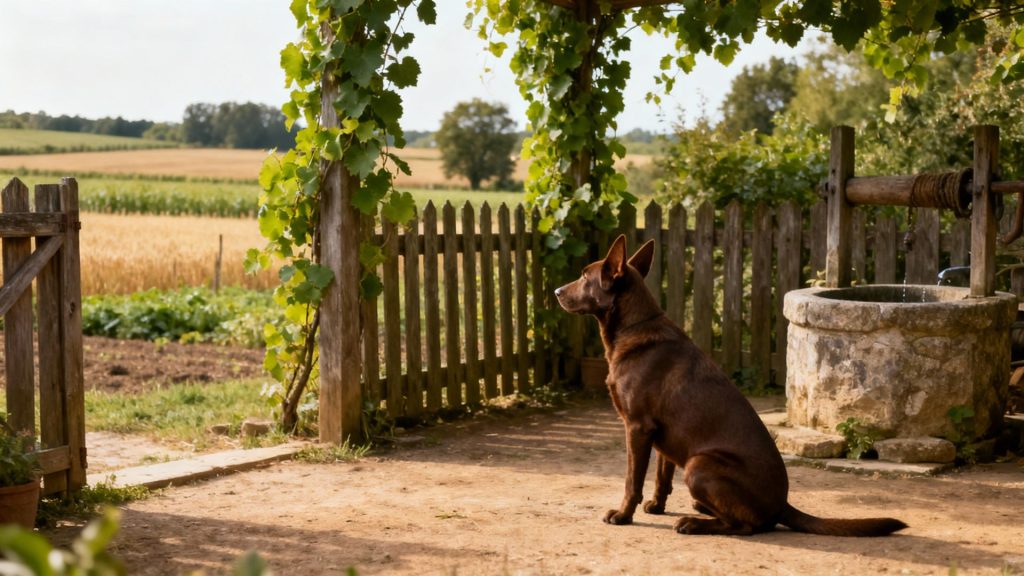
Guardians of the Hearth Flame: Dogs, Weaving Millennia of Loyalty into the Human Soul
From wolf ancestors to indispensable companions, dogs have coevolved through selective breeding, their unparalleled senses and social intelligence forging bonds that redefine ecological interdependence and emotional resilience.
Imagine standing at the edge of a misty meadow at dawn, where the first light kisses the dew-laden grass. A shadow emerges—silent, purposeful—a dog, its form silhouetted against the rising sun. Eyes gleam with ancient wisdom, inherited from wolves that once roamed these wild expanses. This creature, now a guardian of human thresholds, embodies a paradox: fierce independence tempered by unwavering devotion. In this primordial moment, the dog’s presence evokes a visceral connection, a bridge between untamed wilderness and the cultivated sanctuaries we call home. Its gait, steady and assured, whispers of epochs past, inviting us into a shared narrative of survival and symbiosis that began over 15,000 years ago. Here, in the hush of nature’s awakening, the dog stands as a testament to life’s enduring adaptability, a living relic of evolutionary artistry that stirs the soul with its raw, unspoken majesty.
Evolution sculpted the dog through a crucible of natural and artificial pressures, transforming the gray wolf’s primal instincts into a masterpiece of biological refinement. Selective breeding by early humans honed traits like heightened olfactory prowess—capable of detecting scents at parts per trillion, a sensory feat unmatched in the animal kingdom—and an innate social cognition that deciphers human gestures with uncanny accuracy. Genetic studies reveal how adaptations in the oxytocin pathway foster deep bonds, turning predation into partnership. This metamorphosis was no accident but a dance of mutual benefit: wolves drawn to human camps for scraps, humans gaining sentinels against threats. Over millennia, genes favoring tameness and cooperation were amplified, crafting a creature that thrives not through solitary dominance but through collaborative harmony. The dog’s evolution is a saga of ingenuity, where nature’s selective forces and human ingenuity converged, birthing a companion whose very essence is interwoven with our own existence, a silent architect of interspecies trust.
Daily survival for the dog unfolds as a poetic interplay of instinct and learned behavior, a rhythm honed by eons in the wild. In domestic settings, remnants of ancestral hunting emerge through playful chases—a ball tossed becomes prey pursued, muscles coiling and releasing with primal grace. Opportunistic scavenging persists, driving dogs to explore urban alleys or rural fields, their diets adapted from raw meat to omnivorous variety yet always governed by efficiency. Behavioral ecologists document how dogs conserve energy through rest cycles, punctuated by bursts of activity that mirror the wolf’s strategic foraging. Thermal regulation via panting and insulating coats showcases physiological resilience, while cognitive abilities enable problem-solving, like navigating complex environments to find food or shelter. This survival ballet, observed in everything from herding breeds directing livestock to rescue dogs locating survivors, highlights a versatile adaptability. Each action, a verse in the epic of endurance, reveals how dogs transform survival into an art form, balancing wild instincts with domestic tranquility in a ceaseless, elegant dance of life.
Reproduction in dogs is a symphony of biological precision and social complexity, echoing the wolf’s pack dynamics while adapting to human-influenced settings. Females enter estrus biannually, signaling readiness through pheromones that attract males in a ritual of selective courtship. Gestation spans approximately 63 days, culminating in litters where maternal care is profound—mothers nurse, groom, and protect pups with fierce dedication, teaching essential skills through play. In domesticated packs, hierarchical structures persist, though less rigid; dominant individuals mediate conflicts, ensuring group cohesion that fosters offspring survival. Studies of feral dog populations show how communal rearing distributes parenting duties, enhancing pup resilience. This reproductive strategy, fine-tuned by evolution, underscores the dog’s role as a nurturer: genes favoring strong parental bonds ensure the transmission of adaptive traits, from disease resistance to behavioral flexibility. In raising the next generation, dogs embody the eternal cycle of life, their familial ties weaving a tapestry of continuity that mirrors our own quest for legacy, a poignant reminder of nature’s intricate design for perpetuation and care.
Ecologically, dogs serve as pivotal mediators in human-dominated landscapes, their influence extending far beyond companionship into the fabric of ecosystems. As commensal species, they regulate rodent populations in agrarian settings, reducing crop damage and disease spread, while in urban sprawls, their presence can deter invasive species. Emotional support roles alleviate human stress, indirectly fostering environmental stewardship by strengthening community bonds. Scientific analysis identifies dogs as indicator species; shifts in their health reflect broader ecological changes, such as pollution levels or biodiversity loss. In conservation contexts, detection dogs aid in tracking endangered wildlife, their acute senses enabling non-invasive monitoring. Yet, this role is not without paradox: free-roaming dogs can disrupt native fauna, yet their integration highlights adaptive cohabitation. The dog’s ecological footprint, from carbon-neutral working breeds to therapy animals, exemplifies a keystone function in the anthropocene—transforming habitats not as conquerors but as harmonizers. Here, in the interplay of wild remnants and human innovation, dogs emerge as unsung architects of balance, their lives a testament to nature’s capacity for symbiosis in an ever-evolving world.
Despite their resilience, dogs face formidable threats that challenge their future, from infectious diseases like canine distemper to human-induced perils such as abandonment and unethical breeding practices. Population declines in certain breeds stem from genetic bottlenecks, while strays suffer from habitat loss and malnutrition. Conservation biologists highlight successes: vaccination programs curb rabies outbreaks, and shelters promote adoption, preserving genetic diversity through responsible ownership. Organizations like the World Small Animal Veterinary Association drive global initiatives, emphasizing spay/neuter campaigns to manage overpopulation. Current trends show promise, with wild dog populations stabilizing in protected areas through collaborative efforts. This narrative, however, transcends despair; it is a call to vigilance, where science and compassion converge. The dog’s survival hinges on human stewardship, a shared responsibility that mirrors broader conservation ethics. In confronting these twilight challenges, we glimpse not an end but a renewal—proof that collective action can safeguard this bond, ensuring dawn breaks on generations yet unborn.
In the silent communion between human and dog, we uncover profound truths about life’s interconnectedness, a dialogue that spans millennia. The dog’s unwavering loyalty mirrors humanity’s own quest for belonging, teaching humility in the face of nature’s grandeur. Their resilience amidst adversity—be it climate shifts or societal changes—offers a blueprint for adaptability, reminding us that strength lies in partnership. Philosophically, this bond elevates the mundane to the sacred; a shared gaze becomes a meditation on mutual dependence, where vulnerability breeds strength. As keystones in our ecological and emotional landscapes, dogs illuminate the path toward a more harmonious existence, their presence a balm for the modern soul. In their eyes, we find reflections of our shared journey: a testament to evolution’s brilliance and the enduring power of connection, urging us to cherish and protect the fragile web of life that sustains us all.