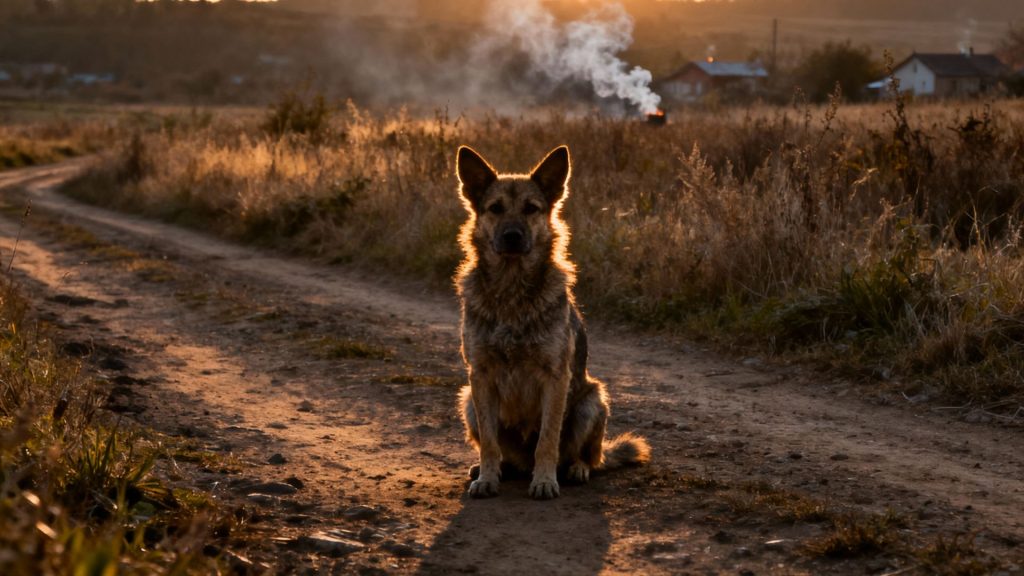
Guardians at the Threshold: Dogs, Our Ancient Companions, Bridging Wilderness and Civilization
From solitary predators to devoted sentinels, dogs have co-evolved with humans for millennia, showcasing unparalleled adaptability while navigating modern perils like genetic fragility and urban isolation.
Imagine the first light of dawn breaking over a prehistoric encampment, where a shadow moves not as a threat but as a guardian—a dog, descended from wolves, now a steadfast companion by the human hearth. This initial encounter captures the essence of the domestic dog: a creature whose presence evokes both primal awe and profound intimacy, bridging the chasm between untamed wilderness and the sanctuary of home. Its alert eyes scan the horizon, ears perked to the subtlest rustle, embodying millennia of shared history in a single, silent vigil that awakens our deepest instincts of kinship and protection.
The blade of evolution honed dogs into masters of transformation, sculpting their physiology and behavior through relentless natural and artificial selection. Over 15,000 years, traits like heightened social cognition and cooperative hunting emerged, enabling dogs to decipher human gestures with uncanny precision—a skill unparalleled in the animal kingdom. This adaptation, forged in the crucible of survival, reflects a genetic tapestry where docility and loyalty became weapons against extinction, allowing them to thrive alongside humans as indispensable allies in a changing world.
In the tapestry of daily existence, dogs weave intricate survival strategies, from scavenging in urban landscapes to executing trained tasks with instinctive grace. Their keen olfactory senses, capable of detecting minute chemical traces for search and rescue or medical alerts, serve as both a symbiotic gift to humanity and a testament to their innate resilience. Whether navigating crowded streets or open fields, dogs employ a repertoire of behaviors—playful stalking, vigilant guarding, and adaptive foraging—that echo ancestral rhythms while harmonizing with human routines.
The bonds of lineage unfold in complex social structures, where dogs form hierarchical packs within human families, demonstrating profound care in reproduction and parenting. Females nurture pups with communal support, their maternal instincts refined through domestication to foster offspring survival. This intricate web of kinship, rooted in cooperative breeding and lifelong attachments, reveals a delicate balance between wild independence and domesticated interdependence, highlighting the evolutionary wisdom in their enduring social contracts.
As ecological architects in human-dominated landscapes, dogs play pivotal roles as emotional stabilizers and biological indicators, their health mirroring environmental toxins and societal stresses. They catalyze conservation awareness, their presence fostering empathy that ripples into broader ecological stewardship. In this symbiotic niche, dogs transform human habitats into micro-ecosystems, where their interactions—such as seed dispersal through movement—subtly influence biodiversity, underscoring their silent yet significant contribution to the web of life.
Current threats cast shadows over this legacy: overbreeding fuels genetic disorders like hip dysplasia, while abandonment in cities and loss of genetic diversity imperil populations. Conservation efforts, including responsible breeding programs and shelter initiatives, offer beacons of hope, emphasizing ethical cohabitation without succumbing to despair. These challenges, met with scientific rigor and compassion, illuminate the path toward sustainable coexistence, where human intervention becomes a force for renewal rather than decline.
Dogs embody the eternal dialogue between resilience and vulnerability, their unwavering loyalty a testament to life’s enduring adaptability. In their gaze, we glimpse reflections of our own humanity—lessons in fidelity, adaptability, and interconnectedness that transcend species. They stand as living monuments to nature’s grand narrative, urging us toward reverence for all creatures and a deeper understanding of our shared place in the cosmos, where every heartbeat echoes the ancient pact between wilderness and civilization.