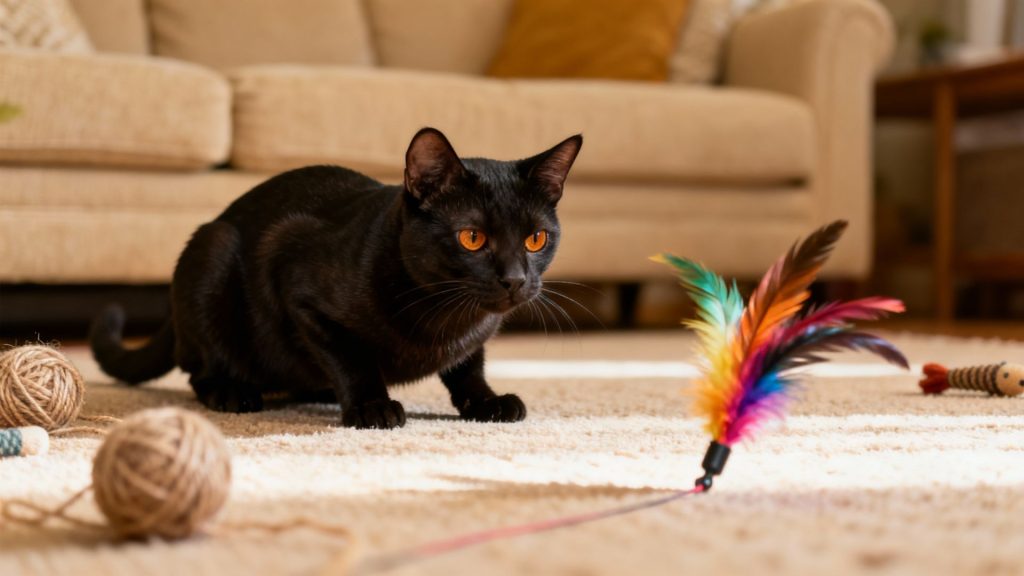
Whispering Hunters at Our Hearth: The Domestic Cat, Where Ancient Wilderness Dwells in Silent Grace
From solitary desert stalker to household companion, Felis catus embodies resilience and adaptability, facing modern perils while preserving its wild heart and ecological role.
Picture this: as dusk settles over the urban fringe, a shadow moves with liquid grace along the edge of a garden wall. The domestic cat, Felis catus, emerges not as a mere pet but as a living relic of wild ancestry. Its eyes, pupils dilated to capture the faintest light, scan the underbrush with an intensity forged in deserts millennia ago. This is not a creature tamed; it is a master of stealth, sharing our homes yet forever tethered to the untamed rhythms of predator and prey. In this quiet threshold between civilization and wilderness, we glimpse the essence of a species that has walked with humans for over ten thousand years, yet remains an enigma wrapped in fur and silence.
Evolution honed the cat into a flawless nocturnal hunter. Its retinas, densely packed with rod cells, grant vision six times more sensitive in low light than our own—a trait inherited from African wildcats like Felis silvestris lybica. This adaptation, sculpted by natural selection in arid landscapes, allows it to navigate moonlit terrains unseen. Equally remarkable are its whiskers, vibrating filaments that map spatial boundaries with micron precision, and ears capable of detecting the ultrasonic rustle of a mouse at thirty feet. These are not mere biological quirks; they are the evolutionary blades that carve survival from chaos, enabling the cat to thrive in diverse habitats from savannas to cityscapes without losing its predatory edge.
Daily existence for the domestic cat unfolds as a symphony of instinct and adaptation. Hunting behaviors, often observed in play, serve as vital practice: stalking, pouncing, and delivering the killing bite mimic ancestral routines essential for energy conservation. Cats are obligate carnivores, relying on high-protein diets to sustain their hypercarnivorous metabolism, a legacy from desert ancestors who hunted small vertebrates. Indoors, this translates into meticulous grooming and territorial patrols—scent-marking via facial pheromones establishes boundaries, a silent language of security. Yet, even in domestication, their souls pulse with the wild, as seen in crepuscular activity peaks at dawn and dusk, echoes of when they were apex micro-predators evading larger threats.
Reproduction and kinship reveal a delicate balance of solitude and connection. Female cats, or queens, enter estrus multiple times yearly, signaling readiness through scent and vocalizations. After a gestation of about 65 days, litters of three to five kittens arrive blind and helpless, dependent on maternal care. The queen nurtures them with fierce devotion, teaching hunting skills through play—a dance of survival instinct passed down generations. While often perceived as solitary, cats form loose colonies where resources abound, communicating through complex vocalizations and body postures. This social flexibility, a product of evolutionary pressures, underscores their ability to navigate both kinship and independence without rigid hierarchies.
In the ecosystem, the domestic cat plays a dual role as both beneficiary and contributor. As descendants of wild predators, they help control rodent populations, reducing crop damage and disease spread in agricultural and urban settings. Their presence often indicates ecosystem health, acting as sentinels for environmental changes. However, this ecological footprint carries responsibility; free-roaming cats can impact native wildlife, highlighting a tension between companionship and conservation. Recognizing this, conservation efforts emphasize responsible pet ownership to mitigate risks, ensuring the cat remains a harmonious thread in the web of life.
Survival today confronts stark challenges: urbanization fragments habitats, while diseases like feline leukemia virus threaten populations. Estimates suggest global stray cat numbers exceed 600 million, with many facing malnutrition and predation. Conservationists, including groups like Panthera, advocate for trap-neuter-return programs to manage numbers humanely, alongside research into genetic diversity to preserve wild traits. This is not a tale of decline but of resilience; through vaccination and education, populations stabilize, offering hope that the cat’s wild spirit will endure, adapting to our shared future.
In the end, the domestic cat embodies a timeless dialogue between nature and nurture. Its journey from desert prowler to hearthside guardian teaches us about adaptation’s beauty—the way life molds itself to survive without surrendering its core. This small predator, with eyes that mirror starlit skies, invites us to reflect on our own place in the natural world: a reminder that even in domestication, wildness persists, whispering of resilience, balance, and the quiet majesty found in every corner of life’s tapestry.