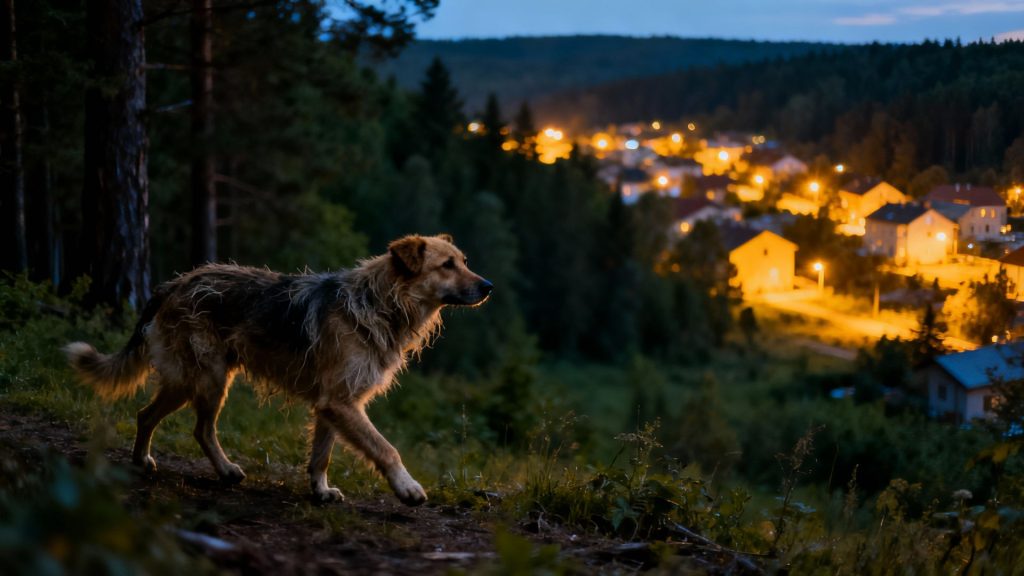
Guardians of the Hearth Flame: The Canine Pilgrimage from Wilderness Shadows to Human Sanctuary
Tracing the domestication odyssey of dogs, their remarkable behavioral adaptability, symbiotic roles in human ecosystems, and contemporary conservation imperatives amid urbanization pressures.
In the mist-shrouded dawn of the Eurasian steppes, where icy winds whispered through tall grasses, the gray wolf emerged as a ghostly sentinel of the wild. Imagine the primal scene: a pack moving with silent precision, their amber eyes scanning the horizon, bodies coiled with the raw energy of untamed survival. This ancient predator, sculpted by millennia of natural selection, would soon embark on a transformative journey, weaving its destiny into the fabric of human civilization.
The domestication of dogs stands as one of evolution’s most elegant experiments, forged over 15,000 years through selective pressures that favored wolves with reduced aggression and heightened social tolerance. Genetic studies reveal neotenous adaptations—retention of juvenile traits such as expressive facial muscles and prolonged playfulness—enabling dogs to decode human cues with uncanny precision. This behavioral plasticity, a gift from natural selection, allowed them to thrive in our settlements, their minds evolving in tandem with our own need for companionship and cooperation.
Daily life for a domestic dog unfolds as a rhythmic poem of instinct and adaptation, echoing ancestral rhythms in modern contexts. From the exuberant chase of a thrown object, mirroring cooperative hunting strategies, to vigilant perimeter patrols that safeguard their human families, these actions are not random but deeply ingrained survival mechanisms. Their extraordinary olfactory capabilities, capable of detecting scents at parts per trillion, transcend mere utility; they serve in roles like detecting medical conditions or locating survivors in disasters, enriching human existence through silent, unwavering service.
The perpetuation of canine lineage is a delicate ballet of biological imperatives and nurturing bonds, governed by seasonal breeding cycles and intensive parental care. Litters emerge as microcosms of social learning, where puppies engage in play-fighting to establish hierarchies, a direct inheritance from wild pack dynamics. In domestic settings, this fosters profound familial attachments, with dogs often assuming roles as emotional anchors or playful mentors to children, embodying an interspecies kinship that defies simplicity.
Within human-dominated ecosystems, dogs function as inadvertent engineers, their presence shaping ecological and social landscapes. As companions, they alleviate loneliness and enhance mental well-being; as service animals, they empower individuals with disabilities; and as sentinels, their health data reveal environmental contaminants through scientific studies. Yet, this integration bears ecological costs—feral populations can disrupt native wildlife via predation or competition, underscoring the delicate balance of responsible stewardship.
Contemporary threats loom large over domestic dogs, manifested in genetic dilution from unregulated breeding practices and abandonment crises in crowded cities. Organizations such as the World Health Organization lead initiatives for vaccination drives and sterilization programs, aiming to curb diseases and stabilize populations while promoting ethical ownership. These challenges, though daunting, offer pathways to resilience through global cooperation and heightened public awareness.
In the quiet devotion of a dog’s gaze rests a profound reflection on life’s interconnectedness—a testament to resilience forged in the crucible of coevolution. Their odyssey from apex predator to faithful guardian illuminates the enduring power of symbiosis, reminding us that in nurturing these bonds, we cultivate the wild within, fostering a world where empathy bridges species divides and honors the sanctity of all life.