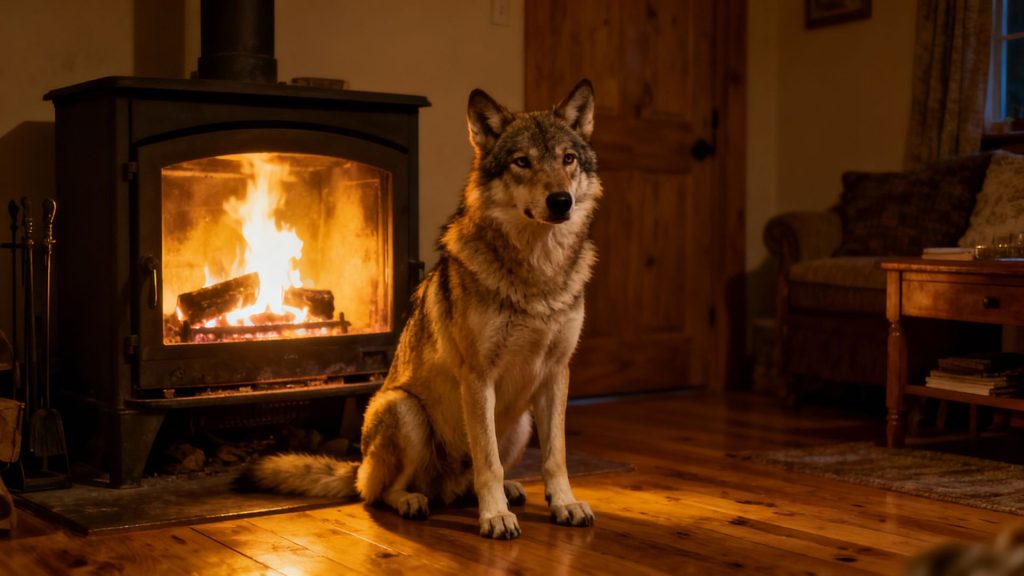
Guardian of the Hearth: The Dog’s Journey from Wild Wolf to Domestic Devotion
A testament to coevolution, this versatile carnivore has transformed human history while confronting contemporary challenges of habitat loss and ethical breeding.
Imagine standing at the edge of an ancient forest, where the first light of dawn filters through towering oaks, and there, amidst the rustling undergrowth, a silhouette emerges—a descendant of wolves, now shaped by millennia of human companionship. Its alert posture, ears pricked forward, and keen eyes scanning the horizon evoke a primal connection, a bridge between wilderness and hearth. This is Canis lupus familiaris, not merely a pet but a living chronicle of adaptation, its presence a whisper of shared history in the modern world. In that moment, the air hums with the silent pact forged in the embers of early human settlements, where loyalty was born from mutual survival.
Through the crucible of natural selection, the dog’s evolution is a masterclass in biological refinement. Genetic studies reveal that selective pressures favored traits such as reduced aggression and enhanced social cognition, allowing early wolves to thrive alongside humans as scavengers around campfires. Over 15,000 years, this domestication sculpted a suite of adaptations: a digestive system capable of processing starches from human leftovers, a coat varying in texture for climate resilience, and vocalizations fine-tuned for communication. These changes, documented in fossil records and genomic analyses, illustrate how environmental demands molded a predator into a protector, turning the wild into the devoted with each generation.
Daily existence for the dog unfolds as a symphony of instinct and learned behavior, a survival strategy repurposed for domesticity. In natural settings, remnants of ancestral hunting manifest in playful chases and scent-tracking, while their omnivorous diet—supplemented by human-provided meals—sustains them across diverse habitats. Observations show dogs engaging in territory marking and pack-like hierarchies, even in solitary home environments, demonstrating an innate drive for social order. This behavioral tapestry, woven from millennia of cohabitation, allows them to navigate urban jungles or rural expanses with equal grace, their routines a blend of vigilance and affection that echoes the wild.
The perpetuation of canine lineage is a dance of intimacy and instinct, where reproduction and nurturing reveal profound biological wisdom. Females enter estrus cycles dictated by seasonal cues, leading to litters of pups that demand meticulous care—licking for hygiene, regurgitated food for weaning, and protective circling against threats. Studies of feral dog populations highlight how communal rearing strengthens social bonds, with non-parental adults often assisting in pup rearing. This intricate web of kinship, observable in everything from suburban backyards to remote villages, underscores the species’ resilience, ensuring genetic diversity and emotional continuity across generations.
As an ecological linchpin, the dog’s role extends far beyond companionship, influencing human ecosystems as a cultural and practical keystone. In agricultural societies, they serve as herders and guardians, reducing predation on livestock; in urban landscapes, their presence aids mental health and community cohesion. Research indicates that dogs act as bioindicators, their health reflecting environmental toxins, while their ability to detect diseases like cancer showcases a symbiotic relationship that reshapes human well-being. This interdependence, rooted in mutual benefit, positions them not as mere pets but as active participants in the ecological narrative, bridging natural and anthropogenic worlds.
Yet, the modern era casts shadows over this bond, with urbanization fragmenting habitats and intensifying threats like infectious diseases, abandonment, and unethical breeding practices. Data from organizations such as the World Health Organization show rising cases of canine parvovirus and distemper in overcrowded shelters, while genetic bottlenecks from selective breeding lead to hereditary disorders. Conservation efforts, including spay-neuter programs and adoption drives, offer beacons of hope, mitigating population declines and fostering ethical stewardship. These challenges, though daunting, illuminate a path toward sustainable coexistence, where human responsibility becomes the guardian of canine futures.
In the grand tapestry of life, the dog embodies a timeless dialogue between species—a testament to adaptability, loyalty, and the enduring power of connection. Its journey from wild progenitor to hearthside sentinel teaches that evolution is not merely survival but a shared narrative of resilience. As we reflect on this bond, we glimpse the broader truths of interdependence: that in nurturing another, we cultivate our own humanity, and in preserving their legacy, we honor the intricate balance of all living systems.