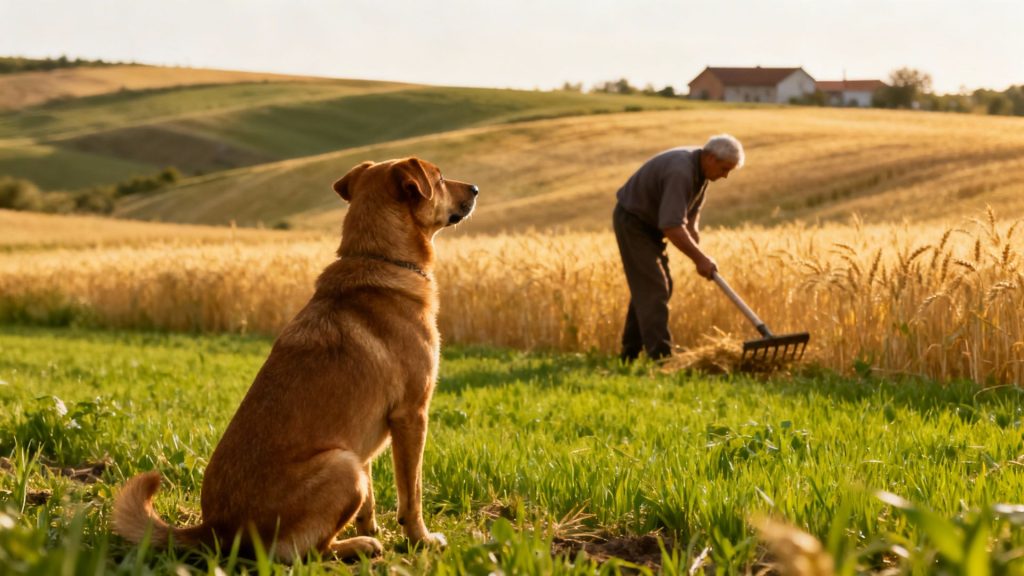
Echoes of Devotion: The Domestic Dog’s Silent Pact Through Millennia of Shared Journey
How co-evolution sculpted the ultimate companion from wild wolf to loyal partner, navigating instincts for survival, love, and adaptation in human-altered realms.
In the amber glow of twilight, a solitary figure emerges from the brush—alert ears pricked, tail held high like a banner of readiness. The domestic dog, Canis familiaris, stands poised on a windswept hillside, its silhouette a testament to an ancient bond forged in fire-lit caves and open savannas. This initial encounter evokes a raw intimacy: eyes gleaming with ancestral wisdom, muscles taut yet relaxed, embodying a paradox of fierce independence and unwavering loyalty that has echoed through human history. As the breeze carries scents of damp earth and distant prey, this moment in the wild whispers of beginnings, where predator turned protector, forever altering our shared fate.
Evolution’s chisel carved the dog from its wolf ancestor over 15,000 years, honing traits through relentless natural selection. Selective pressure favored sociability; wolves that scavenged near human camps thrived, passing genes for reduced aggression and heightened empathy. Modern dogs exhibit a suite of astonishing adaptations: olfaction up to 100,000 times more acute than humans, enabling them to detect pheromones and pathogens invisible to us, and cognitive flexibility allowing them to interpret human gestures with uncanny precision. This transformation, driven by mutual benefit—wolves gained food scraps, humans gained sentinels—created a biological masterpiece where loyalty became an evolutionary strategy, ensuring survival in a rapidly changing world.
Daily survival unfolds as a ballet of instincts tempered by domestication. Wild hunting behaviors persist in play: chasing balls mimics pursuit of prey, while burying bones reflects hoarding tactics from nomadic ancestors. In urban jungles, dogs patrol territories with vigilant barks, warding off intruders much as they guarded prehistoric hearths. Foraging has evolved into scouring parks for crumbs, yet essential strategies remain—digestive enzymes adapted to starch-rich human diets mirror the scavenging past. Rain or shine, these routines sustain life, blending primal urgency with learned harmony, turning each walk into a testament to resilience.
Reproductive bonds weave a tapestry of life’s continuity. Females enter estrus biannually, signaling readiness through pheromonal cues that draw males from afar. Gestation spans 63 days, culminating in blind, helpless puppies reliant on maternal warmth and milk. Parental care is profound: mothers lick newborns to stimulate breathing and later teach hunting through gentle nips. Social structures vary from solitary companions to complex packs, where hierarchical play fosters skills for group living. This nurturing cycle—where vulnerability meets devoted guardianship—echoes nature’s oldest rhythms, ensuring lineage thrives through generations.
Modern threats cast shadows on this legacy. Overpopulation from uncontrolled breeding swells shelters; diseases like parvovirus claim lives, exacerbated by poor veterinary access in underserved regions. Habitat encroachment and abandonment fuel declines, yet conservation emerges through global rescue networks and scientific research into canine genetics. Initiatives led by organizations like the World Health Organization promote responsible ownership, reducing neglect. This twilight era highlights not despair but hope—managed breeding and ethical laws, such as those in European nations, exemplify how human stewardship can restore balance.
In the dog’s eyes, we glimpse eternity: a mirror reflecting our own capacity for loyalty, sacrifice, and unconditional acceptance. Their journey, from wild packs to warm hearths, teaches that adaptation is not surrender but evolution in its purest form. Through shared heartbeats, they remind us of interconnectedness—that every wag of a tail binds humanity to the broader web of life, urging reverence for all creatures. In this silent dialogue, the dog embodies nature’s most profound lesson: love transcends species, anchoring us to the earth’s ancient pulse.