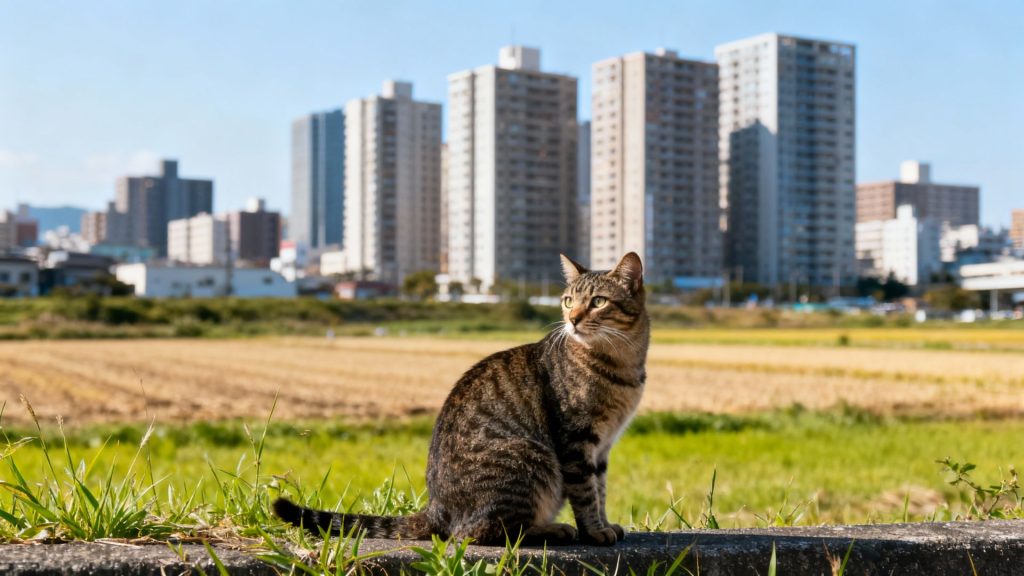
Whispers of the Wilderness: The Domestic Cat, Silent Sentinel at Humanity’s Threshold
How evolution sculpted a master hunter with senses that pierce darkness, thriving alongside civilizations yet confronting perils that test an ancient pact.
At dawn’s first breath, a shadow slips through dew-laden grass, its movement a fluid whisper of untamed grace. The domestic cat, Felis catus, appears not as a mere companion but as a phantom bridging wild realms and human hearths—a creature whose eyes, glowing like embers in the half-light, hold eons of evolutionary secrets. In this solitary moment, it embodies the essence of wilderness, reminding us of the primal forces that pulse beneath our domesticated lives.
Forged by natural selection’s unforgiving hand, the cat’s adaptations are marvels of biological precision. Eyes that gather photons in near-absolute darkness, paired with ears detecting the faintest rustle of a mouse, render it an unparalleled nocturnal hunter. A supple spine and retractable claws allow silent, acrobatic strikes—a symphony of evolution refined over millennia. These traits, emerging from ancestral pressures, transformed the cat into an emblem of survival, thriving where light fades and predators reign.
Survival unfolds as a daily epic, written in stealth and sudden bursts of energy. Employing ambush tactics honed in savannahs and forests, the cat stalks with infinite patience before unleashing lightning-fast attacks. Even in domestic settings, this instinct persists—a toy mouse chased across a carpet echoing ancient hunts. Such behavior cements its role as a consummate predator, balancing solitary patrols with brief communal interactions around shared resources like food or shelter.
Reproduction unveils layers of complexity and tenderness. Queens bear litters, nurturing kittens with fierce devotion, teaching them hunting skills through playful practice. Social structures vary, from solitary wanderers to loose colonies bound by subtle hierarchies, reflecting a duality: independent yet capable of fleeting bonds. This nurturing phase highlights the cat’s ability to sustain lineage across generations, embodying the resilience of life against odds.
As an ecological architect, the cat wields profound influence. An obligate carnivore, it regulates rodent populations, preventing overgrazing and disease spread in agricultural zones. Yet, where introduced, feral cats decimate native birds and small mammals, exposing a delicate balance between control and disruption. This dual role positions the cat as both a guardian of human settlements and a challenge to biodiversity, demanding mindful coexistence.
Modern threats cast long shadows, testing this ancient survivor. Urbanization fragments habitats, diseases like feline immunodeficiency virus sap vitality, and stray populations face neglect. Conservation initiatives, such as trap-neuter-return programs and habitat preservation, offer hope, affirming that safeguarding cats mirrors broader environmental stewardship. Such efforts highlight the species’ enduring adaptability, turning despair into pathways for renewal.
In the domestic cat, we find an enduring parable of resilience and connection. Its silent presence speaks to humanity’s own wild spirit, urging reflection on coexistence and the fragility of life. Through its gaze, we glimpse the eternal dance between nature and nurture—a reminder to honor all creatures as threads in Earth’s intricate tapestry, fostering reverence for the mysteries that bind us.