Echoes of the Wild: The Dog’s Odyssey from Ancient Pack to Modern Hearth, a Journey of Loyalty Unveiled
From the primal forests to the cozy hearth, dogs have evolved as humanity’s steadfast companions, mastering survival through social bonds while confronting modern threats like genetic disorders and urban isolation, embodying resilience in every wag.
Imagine the first light of dawn breaking over a mist-shrouded forest, where the silhouette of a wolf emerges—its eyes gleaming with primal intelligence, muscles coiled for silent pursuit. This ancient ancestor, Canis lupus, casts a shadow that still haunts the domesticated dog, Canis familiaris, transforming a chance encounter into a timeless echo of wilderness. In that moment, the dog’s essence is revealed: a creature born of earth and sky, its presence a bridge between untamed nature and human sanctuary. The air hums with the scent of pine and damp soil, as the animal moves with a grace that whispers of millennia-old survival, inviting us into a world where instinct and companionship intertwine.
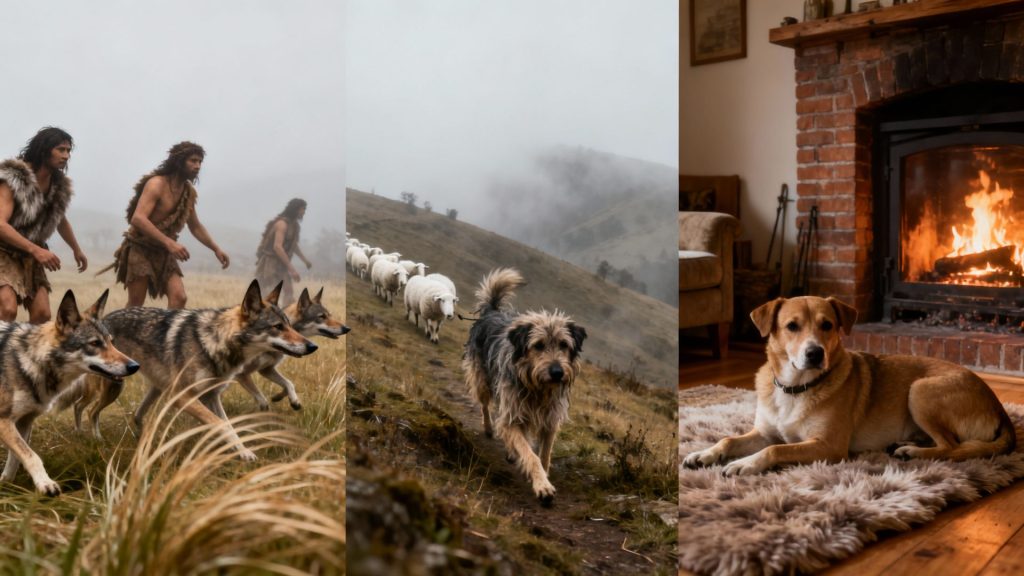
Through the crucible of evolution, dogs were forged by natural selection, their domestication beginning over 15,000 years ago when wolves scavenged near human camps. This symbiotic relationship sculpted extraordinary adaptations: enhanced olfactory receptors, capable of detecting scents at parts per trillion, and a neural architecture wired for social cognition, enabling dogs to read human gestures with uncanny precision. These traits, honed by millennia of co-evolution, transformed predators into protectors, their genetic blueprint a testament to nature’s relentless refinement. The dog’s ability to interpret subtle cues—a tilt of the head or a shift in tone—mirrors the ancient pack dynamics, where survival depended on unity and trust, now repurposed for a life alongside humankind.
In the rhythm of daily existence, dogs enact survival strategies inherited from their wild forebears, turning mundane routines into poetic rituals. Playful chases after balls mimic ancestral hunts, sharpening reflexes and coordination, while territorial marking with scent glands asserts dominance in urban jungles. Foraging instincts manifest in sniffing walks through parks, where dogs explore with noses to the ground, mapping invisible trails. This behavioral repertoire, rooted in pack hierarchy, fosters mutual enrichment—dogs alert to dangers, humans provide sustenance—creating a harmonious dance of interdependence that sustains both species in shared habitats.
The tapestry of canine life is woven with threads of kinship, where reproduction and social bonds reveal profound biological wisdom. Females nurture pups with meticulous care, teaching survival skills through play, while pack structures emphasize loyalty, translating in domestication to unwavering devotion. Dogs form complex relationships, from alpha hierarchies in multi-dog homes to deep emotional connections with owners, releasing oxytocin that mirrors human bonding. This social architecture, a legacy of cooperative hunting, ensures lineage continuity, transforming vulnerability into strength through communal support and lifelong fidelity.
As ecological keystones in modern ecosystems, dogs fulfill roles beyond companionship, acting as emotional stabilizers that reduce human stress and foster community cohesion. Their presence in urban settings mitigates loneliness, with studies showing lowered cortisol levels in owners, while service dogs assist in medical alerts, embodying a bridge between nature and society. This symbiotic role highlights dogs as indicators of environmental health, thriving where human-wildlife interfaces are balanced, yet vulnerable to imbalances like pollution and habitat loss.
Yet, shadows loom over this resilient species: genetic disorders from selective breeding, such as hip dysplasia in larger breeds, and the scourge of abandonment, with millions of strays facing disease and neglect. Urbanization fragments habitats, isolating dogs from natural behaviors, while climate change exacerbates health risks. Conservation efforts, like adoption drives and genetic diversity programs, offer beacons of hope, championed by organizations documented in global news, demonstrating that human stewardship can rewrite narratives of decline into tales of renewal.
In the silent gaze of a dog, we glimpse the eternal dialogue between species—a reminder of nature’s tenacity and the lessons in adaptability, loyalty, and coexistence. Dogs embody the wild’s enduring spirit, teaching us that resilience blooms not in isolation, but in shared journeys, urging humanity toward a future where every heartbeat echoes the harmony of the natural world.