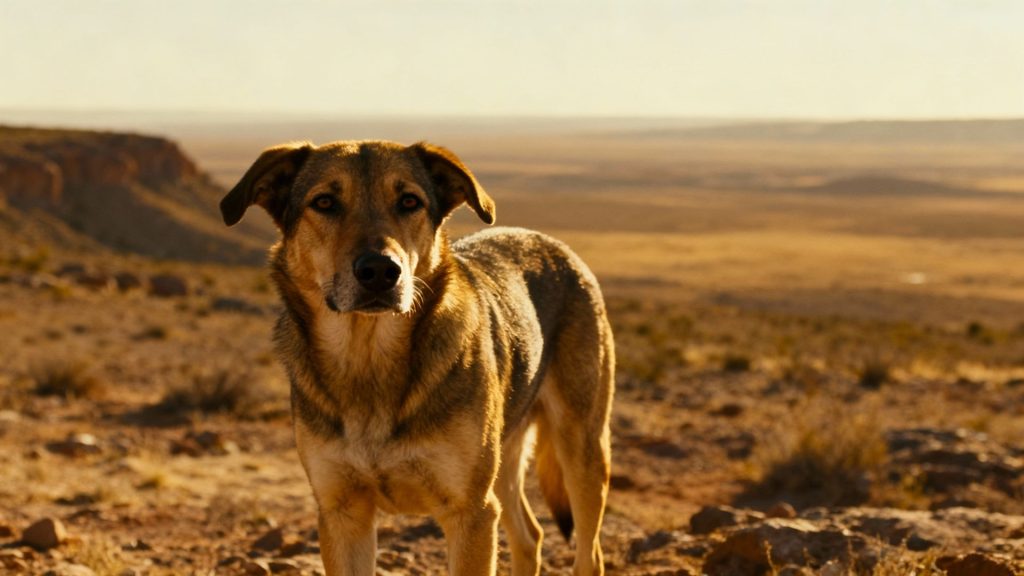
Guardians of the Ancient Pact: Dogs, Whose Loyal Gaze Holds Echoes of Forgotten Wilderness
Evolved from apex predators to cherished companions, dogs navigate the delicate balance between instinct and domestication, their presence shaping human societies and offering profound lessons in empathy and resilience.
Imagine a silhouette etched against the twilight horizon—a dog, poised at the forest’s edge, ears pricked to distant rustles. In this imagined wilderness encounter, its form embodies a bridge between worlds: muscles coiled with ancestral vigor, eyes reflecting the untamed spirit of wolves. The air hums with the scent of damp earth and pine, as this creature, descendant of ancient hunters, stands as a living testament to millennia of co-evolution, its presence evoking a primal awe that stirs the soul.
The evolutionary journey of Canis lupus familiaris is a masterstroke of natural selection. Over 15,000 years, selective pressures forged adaptations that transformed wolves into empathetic companions. Keen olfactory senses, once honed for tracking prey, now detect subtle shifts in human emotion; social hierarchies, inherited from pack dynamics, evolved into intricate bonds of loyalty. Genetic studies reveal mutations in genes like WBSCR17, enhancing sociability and reducing aggression—a biological alchemy that enabled dogs to read human cues with uncanny precision, turning survival into symbiosis.
In the rhythm of daily life, dogs enact survival strategies that echo their wild heritage. Playful chases mimic ancestral hunts, where bursts of speed and agile turns were vital for capturing prey; territorial barks serve as modern sentinel calls, guarding homes with instinctive vigilance. Their diet, adapted to human-provided nutrition, still reflects carnivorous roots, yet they thrive on scraps and kibble, demonstrating remarkable physiological flexibility. This seamless integration of primal instincts—bounding through fields or retrieving objects with focused intent—composes a silent ode to resilience, where every wagging tail narrates a story of adaptation.
The cycle of life unfolds in the tender care of a mother dog nursing her litter, a scene that transcends species. Reproduction, guided by seasonal estrus and human intervention, involves complex social bonds; pups learn through play, developing skills for future interactions. Dogs extend this nurturing to human families, forming deep attachments that foster security and belonging. Research shows their empathetic responses, such as comforting distressed owners, stem from oxytocin-driven connections—a testament to evolutionary wisdom where kinship ensures collective survival, weaving a tapestry of trust across generations.
As integral components of human-dominated ecosystems, dogs function as ecological keystones. In urban landscapes, they influence local wildlife by deterring pests or altering small mammal behaviors; their roles as therapy animals reduce stress and enhance mental health, acting as stabilizers in social structures. Studies indicate that their presence lowers cortisol levels in humans, promoting community well-being. This multifaceted impact—from emotional support to inadvertent ecosystem engineering—underscores their significance, transforming concrete jungles into realms where wild instincts harmonize with civilization.
Despite their ubiquity, dogs face grave threats: abandonment, abuse, and health crises from overbreeding, such as hip dysplasia in breeds like German Shepherds. Conservation efforts, led by organizations like the ASPCA (documented in news reports), champion adoption and responsible ownership, offering hope through education and rescue initiatives. Population trends show declines in stray numbers in regions with strong welfare laws, yet challenges persist. This duality—of vulnerability and resilience—calls for mindful stewardship, where protection is not charity but a moral covenant to honor a bond that defines our shared humanity.
In the quiet communion with a dog, we glimpse eternal truths: their unwavering loyalty mirrors our own capacity for love, teaching lessons in forgiveness and presence. Dogs embody the paradox of strength and fragility—a wild heart tempered by trust. They remind us that in the tapestry of life, every connection is a thread of resilience, urging reflection on interdependence and the sacred duty to safeguard all beings. Through their gaze, we find not just companionship but a profound dialogue with nature’s enduring wisdom.