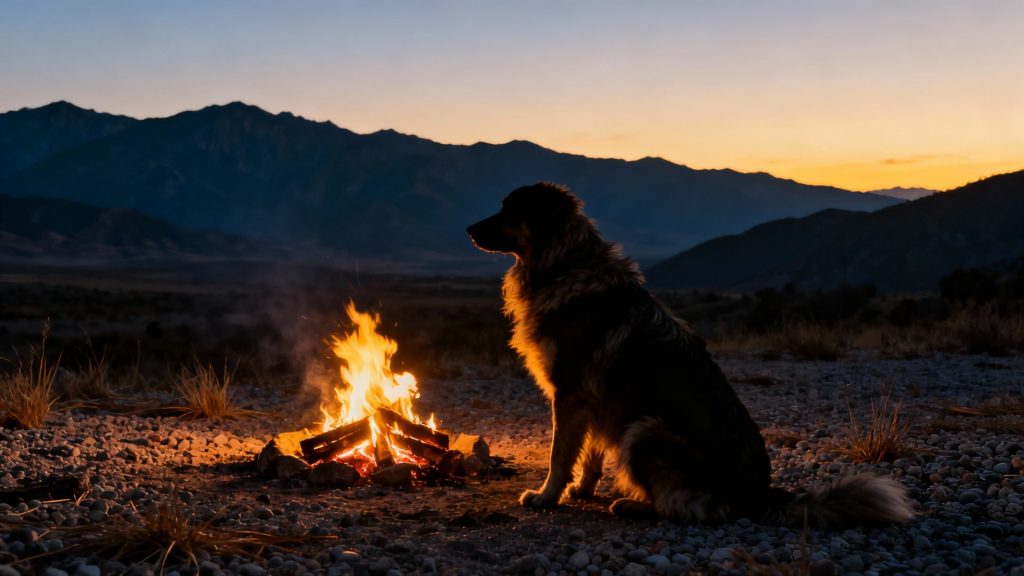
Whispers of the Ancient Bond: Canine Spirits Dancing Between Wilderness and Hearth
From primal hunters to devoted guardians, dogs embody an evolutionary saga of loyalty, shaping human history and ecosystems with their adaptive genius and unwavering companionship.
Imagine standing on the edge of a moonlit forest, where the shadow of a gray wolf emerges from the undergrowth—its amber eyes piercing the darkness, muscles coiled with primal grace, a silent testament to the wild origins that echo in every domestic dog. This ancestral encounter, frozen in time, reveals not just a predator but a being whose spirit would forge an unbreakable alliance with humanity, transforming desolate landscapes into shared realms of trust and survival. Here, in the hushed breath of nature, the dog’s journey begins, a symphony of instinct and intelligence that resonates through millennia.
Evolution honed the canine form with surgical precision, sculpting wolves into dogs through millennia of natural and artificial selection. Key adaptations like heightened social cognition and digestive flexibility allowed early canids to thrive alongside humans, turning scavengers into partners; studies of fossil records and genetic analyses, such as those from ancient DNA samples, show how traits like reduced aggression and enhanced communication evolved, enabling dogs to read human gestures with uncanny accuracy—a biological masterpiece forged in the crucible of coexistence, where survival favored the bond over the bite.
In the rhythm of daily existence, dogs enact a survival ballet that blends inherited instincts with learned behaviors. From scent-driven hunts in urban parks to playful chases that mimic ancestral pack dynamics, their lives are a tapestry of foraging, territorial marking, and problem-solving; observe how a retriever’s precise retrieval or a herder’s intuitive circling draws from deep-seated drives, yet adapts seamlessly to modern routines, transforming mundane moments into opportunities for mental and physical enrichment that sustain their well-being.
Reproduction and kinship weave the fabric of canine society, where complex social structures emerge from litter bonds and pack hierarchies. Mothers nurture pups with meticulous care, teaching survival skills through gentle nudges and shared warmth, while alpha dynamics in multi-dog households mirror wild pack orders, fostering cooperation and conflict resolution; this intricate dance of birth, growth, and alliance underscores the species’ resilience, ensuring genetic continuity through generations of selective breeding that balances health with heritage.
As ecological linchpins, dogs transcend their role as mere companions to become keystone species in human-dominated ecosystems. They regulate pest populations through natural hunting behaviors, aid in conservation efforts as detection animals for endangered species, and provide emotional stability that enhances community well-being—functions documented in ecological studies showing their impact on biodiversity and human mental health, where their presence fosters symbiotic relationships that ripple through urban and rural landscapes alike.
Yet shadows loom over this bright legacy, with threats like genetic disorders from irresponsible breeding and abandonment crises in overcrowded shelters challenging their future. Conservation initiatives, led by organizations such as those highlighted in global news reports, work to promote ethical ownership and spay-neuter programs, turning despair into hope; these efforts, grounded in science and compassion, aim to preserve the canine legacy against modern perils, ensuring their story endures.
In the eternal dialogue between species, dogs offer profound lessons on adaptability, loyalty, and the interconnectedness of life. Their journey from wild prowlers to hearth guardians mirrors humanity’s own quest for balance, urging us to cherish these bonds as reflections of nature’s wisdom—where every wagging tail whispers of resilience, inviting us to honor the delicate web of existence that binds all living beings in a shared, silent poetry.