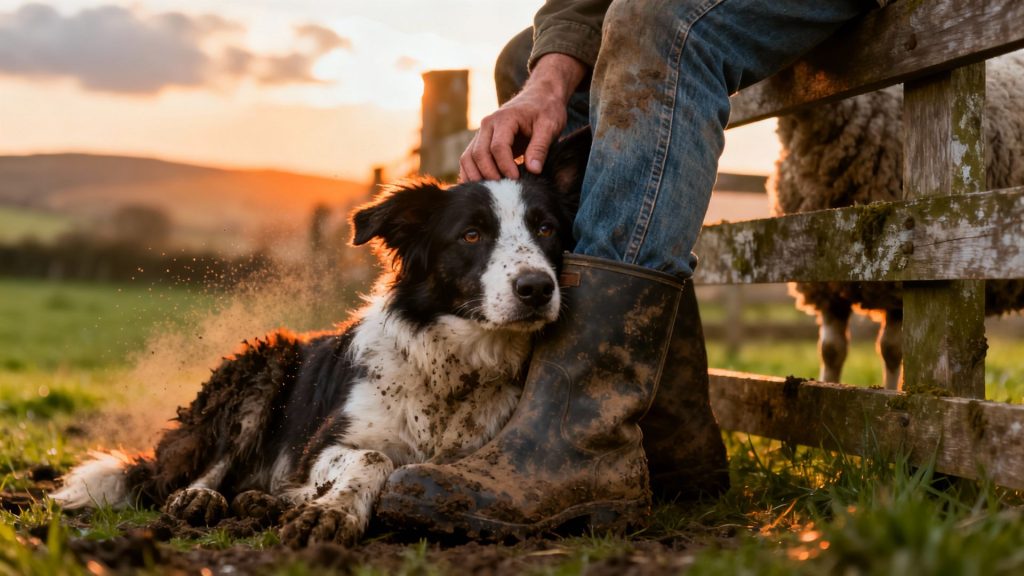
Whispers of the Ancient Hearth: The Domestic Dog, a Symphony of Loyalty Woven into Human Souls
From wild wolf origins to cherished companions, Canis lupus familiaris embodies an evolutionary masterpiece of symbiosis, its instincts and adaptations forging an unbreakable bond across millennia.
Imagine a chill dawn breaking over the Eurasian steppes, 15,000 years past, where a gray wolf, drawn by the scent of human encampments, cautiously approaches—not as predator, but as potential ally. This primal encounter, silent yet profound, marks the genesis of a relationship that transcends species. Today, we witness not a wild beast, but a guardian whose presence resonates in every heartbeat of domestic life. Through millennia of co-evolution, this creature has shed its solitary ferocity, emerging as a sentinel of hearth and home, its eyes reflecting both the untamed wilderness and the warmth of human trust. In the quiet spaces between campfires and modern homes, the dog stands as a living testament to nature’s capacity for alliance, shaping our shared history with every wag of its tail.
The evolutionary blade that carved the domestic dog from its lupine ancestors is honed by selective pressures beyond mere survival. Among its most profound adaptations lies the olfactory system—a biological marvel capable of detecting scents at concentrations a trillion times fainter than human perception. This gift, once essential for tracking prey across vast terrains, has been repurposed through domestication into roles like search-and-rescue or medical detection, proving nature’s ingenuity in reweaving instincts. Equally transformative is the neural architecture supporting social cognition; dogs interpret human gestures with unparalleled acuity, a trait sculpted by generations favoring individuals who read our intentions. Science reveals this as a cascade of genetic changes, such as variations in the WBSCR17 gene linked to hypersociability, demonstrating how natural selection has forged not just a companion, but a cognitive mirror to our own emotions.
In the theater of daily survival, the dog’s behaviors unfold as an intricate dance between inherited instincts and adaptive innovation. Observe the herding breeds, whose ancestors drove prey toward hunters; now, they channel that energy into corralling livestock or even children, their movements precise and purposeful. The act of digging, a vestige of caching food, is redirected into playful excavations in backyards, while alert barking—once a warning against predators—serves as a domestic alarm system. Such strategies are choreographed by an innate intelligence that maps environments, from urban jungles to suburban lawns, ensuring sustenance and security. This repertoire speaks to a resilience honed over epochs, where each sniff, chase, or rest is a verse in an ongoing poem of perseverance, blending the wild’s raw vitality with the rhythms of human coexistence.
Bloodlines and bonds intertwine in the dog’s reproductive saga, where life’s continuity is nurtured through intricate social structures. Reproduction begins with courtship rituals—subtle signals like tail wags or scent marking—that echo pack hierarchies, yet domesticated dogs often breed under human stewardship. Litters of pups, typically 4-6, emerge blind and helpless, relying on maternal care that includes grooming, nursing, and teaching. This parental investment extends beyond biology; mothers instill crucial survival skills, from bite inhibition to social cues, in weeks-long lessons. As pups mature, kinship forms the bedrock of their world, whether in multi-dog households mimicking ancestral packs or solitary bonds with humans. This nurturing dynamic underscores a profound truth: in dogs, family is not merely genetic but experiential, a legacy of devotion passed through generations, cementing their role as perpetual kin in our shared narrative.
Within the tapestry of human-dominated ecosystems, dogs function as ecological keystones, their impacts rippling far beyond companionship. As emotional stabilizers, they lower stress hormones in humans, enhancing mental well-being—a symbiotic exchange documented in studies on oxytocin release during interactions. Physically, they aid in waste management by scavenging, while certain breeds maintain agricultural balance as herders or rodent controllers. This role as an “ecosystem engineer” is vital; for instance, in detecting diseases like cancer through scent, they serve as early-warning sentinels. Yet, their influence is dual-edged; without stewardship, dogs can disrupt local wildlife, such as predation on native species, highlighting the delicate equilibrium they inhabit. In this mosaic, the dog is not an accessory but an essential thread, weaving resilience into the fabric of modern ecology.
Dawn brings shadows: the dog’s existence now faces trials from the very civilization it embraced. Primary threats loom, such as abandonment and overpopulation, with millions entering shelters annually, and diseases like rabies still endemic in regions with lax vaccination. Climate shifts exacerbate heat stress in breeds ill-suited to warming climates, while urban sprawl fragments habitats. Conservation efforts offer hope; organizations like the World Health Organization advocate for responsible ownership through spay/neuter programs and education, while advances in genetics bolster breed health. This twilight phase is not a dirge but a call to action, urging us to honor our evolutionary pact through policies that protect both species and souls, fostering a renaissance of care.
In the eternal dialogue between human and hound, we find mirrors to our own nature—lessons in loyalty, adaptation, and the courage to connect across divides. The dog’s journey, from wild roamer to soul-bound guardian, whispers of life’s enduring resilience, urging us to cherish these bonds as sacred threads in the grander web of life. For in their eyes, we glimpse not just a companion, but the very essence of coexistence—a timeless reminder that in loving another species, we rediscover our own humanity.