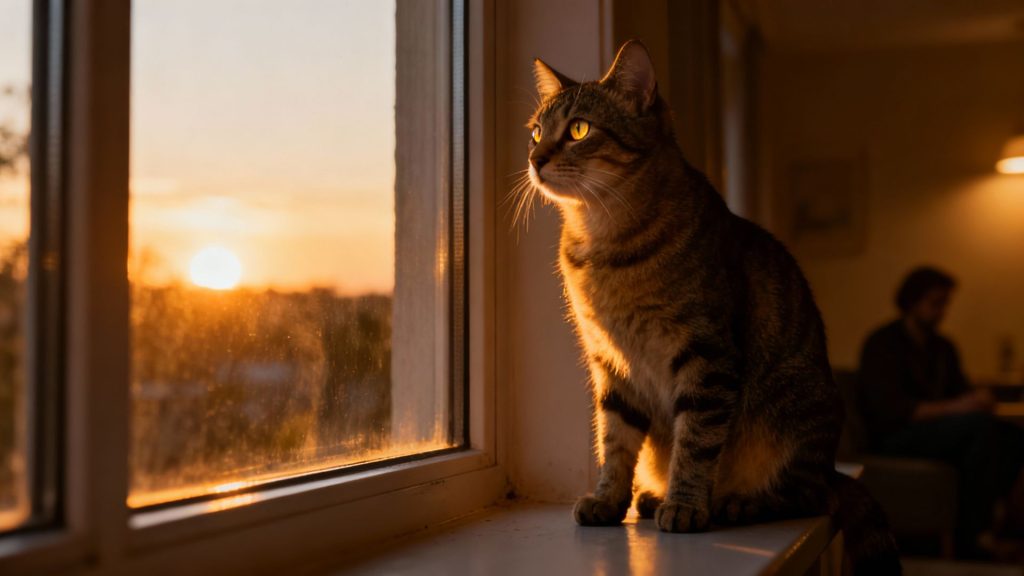
Whispers of the Ancient Hunt: The Domestic Cat, Keeper of Shadows and Silent Bonds
Evolving from solitary desert stalkers to cherished hearth companions, cats embody the delicate dance of wild instincts and human cohabitation, revealing nature’s artistry in adaptation.
As twilight descends upon a suburban garden, a sleek silhouette glides through the shadows—a domestic cat, its movements fluid and silent, a ghost of its African wildcat ancestors. Eyes like polished emeralds pierce the dimness, scanning for unseen movements. This first encounter captures the essence of a creature straddling two realms: the untamed wilderness etched in its DNA and the comforting proximity of human homes, a living testament to millennia of coexistence.
Forged by relentless natural selection, the cat’s evolutionary toolkit is a masterpiece of survival. Its retractable claws, honed for stealthy ambushes, and vertically slit pupils that expand to gather faint light sixfold better than human eyes, are adaptations born of arid savannahs. These features, coupled with hypersensitive whiskers detecting minute air currents, transform the cat into a nocturnal micro-predator, a silent hunter sculpted by the harsh demands of ancient landscapes.
Daily life unfolds as a choreographed ritual of instinct. The cat employs an ambush strategy, lying in wait for hours before unleashing explosive bursts of speed to capture prey. This hunting prowess, often observed in urban alleyways or rural fields, echoes ancestral patterns, a survival ballet where patience and precision reign supreme. Even in domestication, the drive to stalk and pounce persists, a primal rhythm woven into the fabric of its existence.
Reproduction reveals a tapestry of maternal dedication and fleeting social bonds. Queens birth litters in secluded nests, nurturing kittens with fierce protectiveness. Through playful mock hunts, young cats hone essential skills, learning independence under their mother’s watchful eye. This brief yet intense phase underscores the species’ resilience, balancing solitary tendencies with the necessity of nurturing, ensuring the lineage’s endurance through generations.
In human-altered ecosystems, cats serve as ecological mediators. Historically, they curbed rodent infestations, safeguarding crops and granaries. Today, as companions, they offer psychological solace, reducing human stress. Yet, their predatory impact on local birds and small mammals highlights a complex symbiosis, where domestication intertwines with ecological stewardship, making them keystones in the narrative of human-wildlife integration.
Contemporary challenges loom, including overpopulation in feral colonies, disease transmission, and habitat encroachment. Conservation initiatives, led by groups like the International Cat Care, emphasize spaying, neutering, and responsible ownership. These measures, grounded in science, foster sustainable populations, ensuring cats thrive without compromising biodiversity, a testament to pragmatic coexistence in an ever-changing world.
The cat’s journey from wild prowler to domestic enigma mirrors humanity’s own quest for balance. It teaches us about the persistence of instinct, the beauty of adaptation, and the profound connections that transcend species. In its silent presence, we glimpse the eternal dialogue between civilization and wilderness, inviting reflection on our shared place in the intricate web of life.